The Trick Began With Numb Legs
In 1966, a Japanese doctor named Yoshiaki Sato sat through a long ceremony in the traditional seiza position, and his calves went to sleep. The numbness was ordinary — everyone's legs do that in seiza. What made the moment productive was what followed: the circulation squeezing back in as he stood, and the slow suspicion that the tingling aftermath had done something to the muscle underneath.
Sato spent the next decades refining the observation into a system he called kaatsu, training with added pressure, in which narrow bands or cuffs compress the top of a limb just enough to slow the blood leaving it while exercise proceeds at loads that would otherwise be too light to matter.
Half a century later the method has an English name and a place in the exercise-science literature: blood flow restriction, or BFR. The sales pitch that travels with it — grow like you're lifting heavy while lifting almost nothing — deserves exactly the skepticism you're applying right now.
But the underlying physiology is not a gimmick, the trial record is large enough to interrogate, and the method has quietly become one of the more useful tools in post-surgical rehab, where the alternative to light loading is often no loading at all.
This article walks through what the cuff actually does, what the meta-analyses say it buys, where the classical tradition would file a deliberately stalled stream of blood, and — because every narrow-cuff Instagram reel skips this part — who should not be doing it.
One disclaimer before the first section, because this method collects overclaims faster than any gym trend we have covered: nothing below is medical advice, the screening conversation with a clinician outranks everything written here, and the version of BFR that produced the good data was narrower and more careful than the version sold online. With that on the table, the method itself is worth the attention.
- BFR compresses the top of a limb to slow venous return while arterial inflow continues partially — a partial stall, not a tourniquet, and the distinction is the entire safety argument.
- The method was reverse-engineered from a mundane experience (numb legs in seiza), then validated backward through trials — which is more than most fitness fads can claim.
"Everyone's legs go numb in seiza. One doctor spent fifty years asking what the numbness was doing to the muscle."
What the Cuff Actually Does
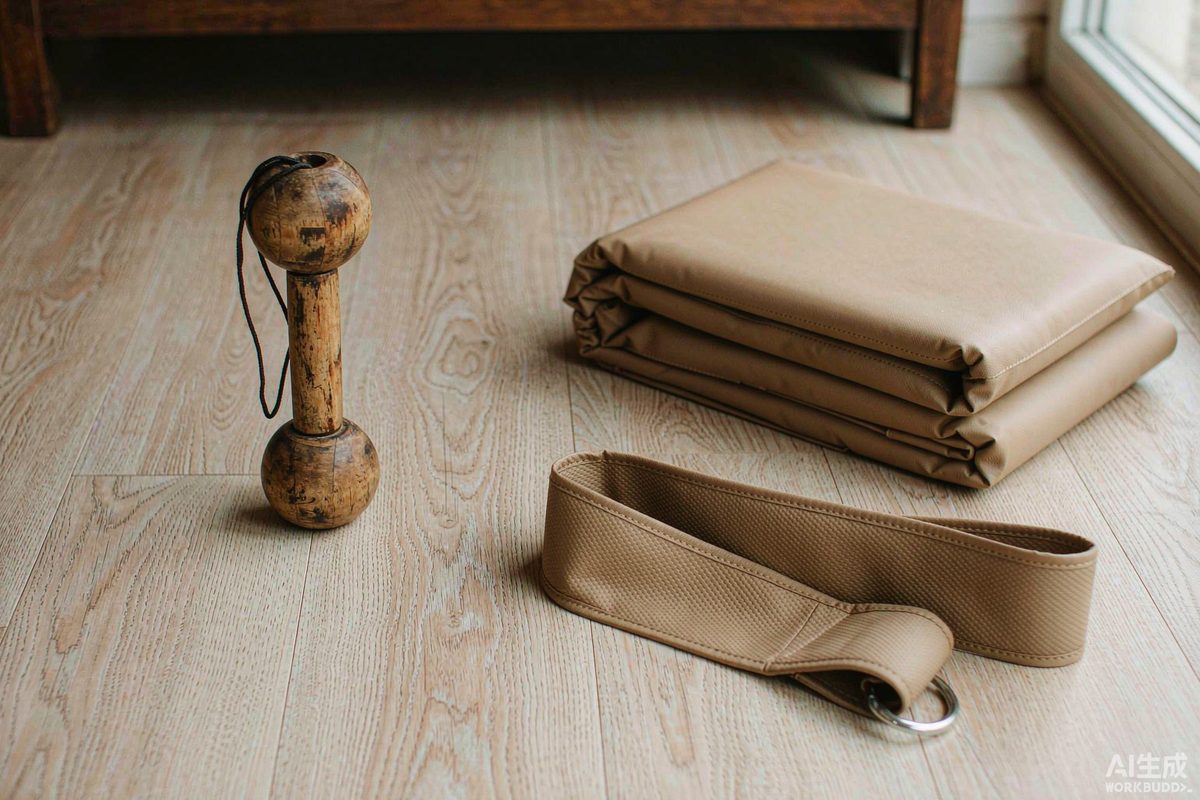
Lift something genuinely heavy and the muscle burns through its fuel faster than blood can wash the waste away. Metabolites accumulate, the muscle's chemistry sours, and the nervous system starts recruiting the fast-twitch fibers it usually saves for emergencies. That sour chemistry is, as far as anyone can tell, a big part of the growth signal. Heavy loads manufacture it directly.
The cuff manufactures it by cheating. A band inflated above a thigh or upper arm compresses the veins that carry blood out of the working muscle while the arteries bringing blood in — which run deeper and hold higher pressure — keep feeding partially.
The muscle drains slower than it refills, metabolites linger, and a set of curls with thirty percent of your max starts producing chemistry that usually requires eighty. Fast-twitch fibers fatigue early and get recruited early. The set ends at a burn rather than a mechanical limit, but several of the internal signatures of a hard set are present anyway.
The dosing conventions that survived research review are odd but specific: about twenty to thirty percent of one-rep max for the lower body, twenty to thirty percent for arms, with the classic set scheme running thirty repetitions, then three sets of fifteen, with thirty seconds of rest — cuffs on the whole time. That scheme looked arbitrary the first time we read it too.
It is, at least, consistently arbitrary, and the trials that produced the headline results used it.
A note on the pressure numbers themselves: studies rarely quote a single figure, because the pressure that occludes a slim forearm is not the pressure that occludes a thick thigh.
The convention that developed — expressing cuff pressure as a percentage of each person's limb occlusion pressure, usually somewhere between forty and eighty percent — is the field's admission that body variety defeats any chart printed on packaging. It is also the reason the method's home-market version starts from a disadvantage no unboxing video mentions.
- The mechanism is metabolic, not mechanical — the cuff makes a light set chemically expensive, which is why the loads look absurd next to the results.
- Standard trial dosing: roughly 20-30% of one-rep max, sets of 30-15-15-15, thirty seconds rest, cuff inflated throughout. Deviate far from that and you are running an experiment of your own.
"Heavy lifting makes the chemistry honestly. The cuff makes it by closing the exits."
The Meta-Analysis Split the Prize
In 2018, Lixandrão and colleagues gathered the trials that had directly compared high-load training against low-load training with blood flow restriction, and the scoreboard that emerged is more interesting than either camp's advertising.
For muscle size, the two approaches tied — low-load training with cuffs produced hypertrophy statistically similar to conventional heavy training, a result that survives across different cuff widths and pressure prescriptions. For maximal strength, heavy training won.
Not dramatically, but clearly, and the gap makes physiological sense: strength is partly a rehearsal of force production, and no cuff session rehearses anything heavy.
Read the fine print before celebrating, though. The hypertrophy studies ran weeks to months, mostly in supervised settings, mostly with pneumatic cuffs whose pressure was set relative to each person's limb occlusion pressure — the minimum pressure that stops blood flow in that limb — rather than a number printed on a chart.
That individualized calibration is what separates the trials from the elastic bands sold in the fitness aisle, a distinction with consequences we will get to.
The honest summary, then: for size, the cuff closes most of the gap that light loads leave open. For strength, it closes some of it and cannot close all. Anyone selling narrow bands as a full substitute for heavy training is selling the one claim the meta-analysis declines to make.
There is also a durability question the meta-analysis cannot answer. Most of the included trials ran somewhere between a couple of months and half a year, which is long enough to demonstrate that the stimulus exists and short enough to leave the decade-long record — whether cuffed muscle built in your forties still behaves like barbell-built muscle in your sixties — genuinely unmeasured.
The honest position is that the short-term data is strong and the long-term data does not yet exist, and anyone telling you otherwise is guessing with confidence.
- Trial verdict: comparable hypertrophy, inferior maximal strength — buy BFR for size and rehab tolerance, not for a new deadlift.
- Trials calibrated pressure to each individual's limb occlusion pressure. Fixed pressure without measurement is a different, unmeasured experiment.
"The cuffs tied the size contest and lost the strength one. Advertising quotes the first half only."
Twenty Minutes of Walking, Under Pressure
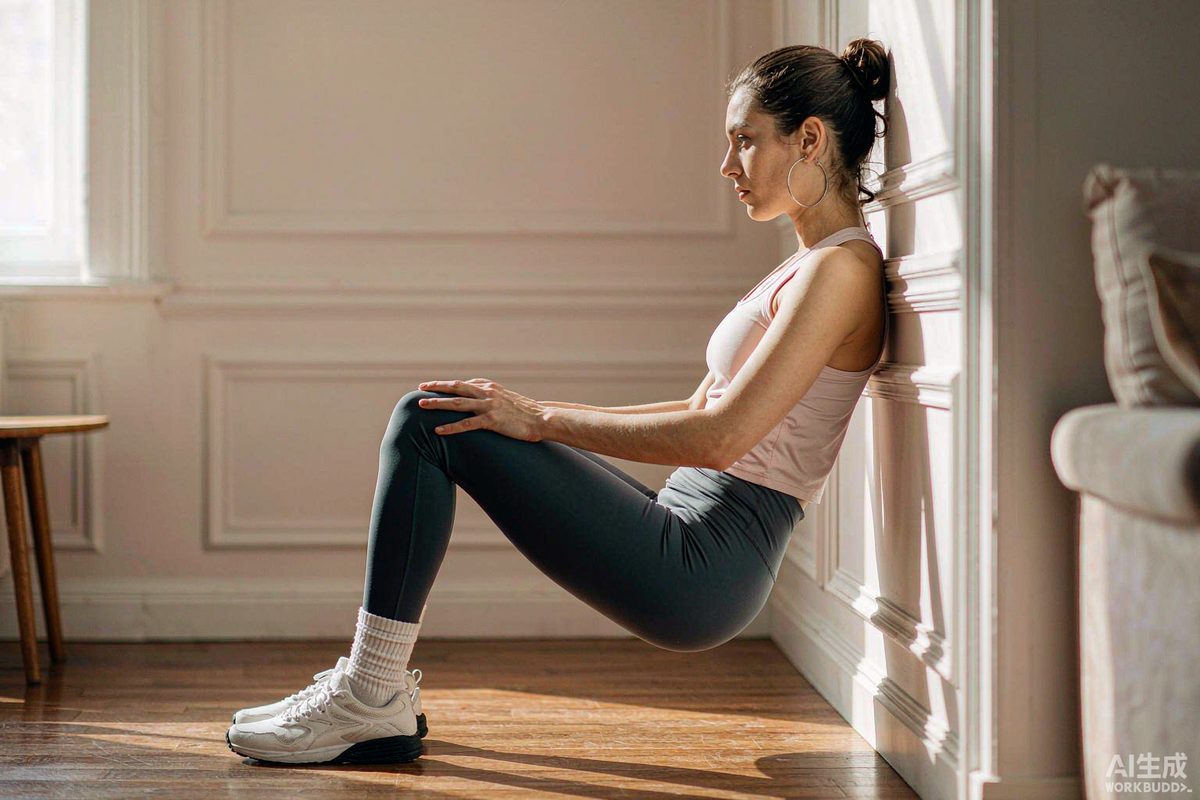
The most quietly impressive part of this literature involves no gym equipment at all. Walking is the exercise almost everyone can do and the one that, for anyone below a certain fitness floor, builds almost no muscle — the loads are trivially small and the body is thoroughly accustomed to them. Add cuffs above both thighs, however, and the walk changes category.
A trial by Abe and colleagues put older adults on a treadmill for twenty minutes a day with pressure belts above the thighs; six weeks later, the cuffed walkers had gained measurable thigh muscle cross-sectional area, knee extension and flexion strength, and functional test performance, while the uncuffed walkers gained none of it.
Pause on what that means for the population it tested. These were people in their sixties and seventies, for whom the alternative to heavy resistance training is usually no resistance training — joint pain, fear of injury, or plain deconditioning having closed that door. A walk with cuffs is the same walk. The knees see the same ground reaction forces.
What changes is the price the thigh muscle pays for moving, and that price turns out to be high enough to matter.
The wall sit in the image above belongs to the same family of ideas: a bodyweight position that already borders on hard, made genuinely expensive under compression. Not every reader needs this. But for the person who cannot, yet, safely load a squat to the intensity the strength literature prefers, the cuff converts feasible exercises into sufficient ones, and that conversion is the entire point of the method.
A practical warning from the same trials, though: the walking studies used proper pneumatic belts at documented pressures, not random elastic wraps pulled to a guess. The distance between those two objects is most of this article's safety argument, and it is worth keeping in mind before the walking idea leaves the page and reaches the shopping cart.
- Cuffed walking trials show real muscle and strength gains in older adults from twenty minutes a day — an option when heavy loading is out of reach.
- The cuff raises the metabolic cost of easy movements; it does not change the joint loads, which is precisely why rehab uses it.
"The walk stayed a walk. Only its price changed, and the thighs paid it."
Rehab Found It First
Long before fitness influencers discovered cuffs, physical therapists were using them on patients who could not tolerate real loads — after ACL reconstruction, in tendon repairs, with older adults whose skeletons would not forgive a barbell.
In 2017, Hughes and colleagues published a systematic review and meta-analysis in the British Journal of Sports Medicine covering BFR training specifically in clinical musculoskeletal rehabilitation.
Their synthesis found that adding blood flow restriction to low-load rehabilitation improved muscle strength and hypertrophy compared with the same low-load work done without it, with a generally favorable safety profile across the included trials.
That framing — added to, not instead of — is the clinically mature version of the method. Post-surgical legs are protected from heavy loading for months for good reason; the tissue cannot yet handle the mechanical demand. What they can handle is a metabolic demand delivered through light movement, and the cuff supplies exactly that bridge, keeping muscle from wasting across the long unprotected stretch.
The same logic extends to anyone whose pain or pathology caps the tolerable load: the stimulus arrives through chemistry instead of weight.
Two cautions belong here. Clinical use in the trials typically involved trained professionals, screened patients, and exclusions for circulatory problems — none of which the home buyer replicates by strapping on elastic bands.
And a review of clinical trials is not a license for unsupervised use in people with vascular disease, on blood thinners, or with a history of clots; those groups were largely screened out of the evidence base, which means the evidence base says nothing about them.
Something similar holds for the growing list of online programs prescribing BFR alongside aggressive training schedules. The clinical trials layered cuffs onto rehabilitation plans designed by professionals around a single recovering joint; stacking them onto five hard sessions a week is a combination no review has examined, and the absence of evidence for harm in one context is not evidence of safety in the other.
- In clinical rehabilitation, BFR added to low-load work improved strength and hypertrophy versus low-load alone — the strongest and most settled use case.
- The trial populations were screened by professionals. If you have vascular disease, clot history, or take anticoagulants, the evidence base did not include you; talk to a clinician first.
"Rehab did not adopt the cuff because it was fashionable. It adopted it because surgery had left no heavier option."
Wan Chen: The Old Reading of a Stalled Stream
The Neijing, the classical base text of Chinese medicine, treats circulation as the body's maintenance department. One chapter states it as a job description: the channels are that by which blood and qi move, moistening the sinews and bones and benefiting the joints.
Another makes the dependency explicit in a line that reads almost like physiology — the feet receive blood and are able to walk; the palms receive blood and are able to grip. Function follows perfusion. Starve a limb of blood long enough and you do not get a stronger limb, you get a numb one.
Into that frame walks a method that deliberately, briefly, stalls the stream. The instinctive classical verdict would seem obvious: stagnation is pathology, full stop. The canon itself says so in its needling chapters — where stale blood pools, drain it, the principle called wan chen ze chu zhi.
But the same tradition paired that maxim with an older observation we have already quoted: tissue that receives blood performs. The classical system, read generously, understood both directions — circulation as the precondition of function, and interrupted circulation as something that demands correction, not celebration.
We will not pretend the mapping is mechanism. Sato's cuffs are a modern intervention with a measured physiological story, and the Neijing is a descriptive tradition from a pre-physiological era; nothing in the classical corpus predicts metabolite accumulation or fast-twitch recruitment.
What the old frame contributes is a useful symmetry: the tradition that says the feet receive blood and are able to walk would not be surprised that a walk becomes more instructive when the blood's departure is briefly obstructed — nor would it let you forget that the obstruction ends. The cuff is a borrowing against the body's circulation, repaid the moment the band comes off.
- Classical frame: perfusion enables function (足受血而能步), stagnation is pathology (菀陈则除之) — the cuff is a brief, deliberate, and fully repaid loan against the first principle.
- The TCM material here is a descriptive lens, not a mechanism claim. The physiology is measured elsewhere in this article; the poetry is not evidence.
"The tradition says the feet walk on blood. The cuff asks what those feet learn when the blood lingers."
Where the Method Goes Wrong
Every mechanism this article has praised runs in a direction that becomes harmful if pushed. Partial arterial restriction is the design; complete arterial occlusion is the injury risk.
The consensus guidelines published by Patterson and colleagues in 2019 — a document written by most of the field's senior researchers — lean heavily on pressure calibrated to the individual, wide enough cuffs applied to the correct anatomy, and short sessions with the bands released between exercises.
The home market ignores most of that. Elastic wrap-style bands, the cheapest and most popular option, deliver whatever pressure the user's arm decided on that morning — far too much, usually, because a wrap that feels secure is frequently a wrap that has shut the artery down entirely. Numbness, tingling, and a limb turning color are not signs the method is working; they are signs to stop, immediately.
Bruising at the wrap site, a session that leaves the limb cold afterward, or any sharp pain under the band all belong in the same category.
The trials that produced the good numbers also produced relatively few serious adverse events, but they were running pneumatic cuffs on screened populations — the elastic band on an unscreened lifter at home is a different experiment, and the honest answer is that nobody has meta-analyzed it.
The exclusion list matters more than usual here. Deep vein thrombosis history, peripheral arterial disease, uncontrolled hypertension, pregnancy, recent surgery in the limb being compressed, active infection or cancer under treatment — each of these is a reason to have a clinician's blessing before inflating anything. None of them is a reason the fitness aisle will mention.
Even for eligible users, session hygiene matters more here than in ordinary training. The cuffs belong on bare skin or thin fabric, not over thick sweatpants that pad the pressure unpredictably. Both limbs should not be compressed while you climb stairs.
And the first session with any new cuff belongs at home with nothing scheduled after it — partly to observe how the limb recovers, and partly because a method that makes light exercise expensive can also make standing up expensive, which is an inconvenient discovery halfway down a staircase.
- Numbness, tingling, coldness, or discoloration mean stop now — those are signs of full occlusion, not of the method working.
- Screened out of the trials: clot history, vascular disease, uncontrolled blood pressure, pregnancy, recent limb surgery. If one is yours, the evidence has not spoken about you.
"The difference between a training stimulus and a tourniquet is a pressure gauge and a screening conversation."
The Honest Ledger
Settle the claims against the evidence and the ledger reads as follows. Muscle size: the meta-analytic case for low-load training with cuffs is real, and in populations that cannot tolerate heavy loads it is genuinely valuable — that is the settled middle of this literature. Maximal strength: inferior to heavy training, consistently, and no honest advocate claims otherwise.
Older adults and rehab patients: the most defensible home turf, where the feasible replaces the sufficient and the trade is clearly worth it. Young, healthy, unimpeded lifters: you are buying convenience, not advantage; heavy training still does the whole job.
The evidence has a texture worth respecting. The trials are mostly short — weeks to a few months — run by labs with pneumatic equipment and screening protocols. Long-term outcomes, effects of years of cuffed training, and the real-world record of elastic bands sold online are all under-studied.
The safety review that anchors the field's guidelines is, by its own admission, building consensus from an evolving literature rather than reporting certainty.
And the classical material, as always on this site, is presented as a way of seeing, not a mechanism. The Neijing never imagined a cuff. It did, however, write down the two facts the method now trades on — that the feet receive blood and are able to walk, and that pooled, stale circulation is a debt to be drained — separated by two thousand years from the Japanese doctor who sat through one too many ceremonies.
Both systems agree on the closing point: the stream is meant to move. The cuff is a held breath. Hold it briefly, calibrated, on a screened body — and let the walk do the rest.
- Settled: hypertrophy comparable to heavy training under trial conditions; strength inferior; greatest value in rehab and older adults.
- Under-studied: long-term training effects and unregulated elastic bands. Treat home pressure settings as estimates, not prescriptions.
"A held breath, not a new bloodstream. The method works because it ends — on schedule, every session."