The First Time I Saw a Blanket Do What Acupuncture Couldn't
The first time I draped a weighted blanket over a patient during acupuncture, I wasn't expecting much. She was a 42-year-old lawyer with what we'd call Liver Qi Stagnation converting to Heat — wired-but-tired insomnia. Collapse into bed exhausted, then lie there for two hours with a mind that won't shut up. Six weeks of acupuncture and Suan Zao Ren Tang.
Progress was real but slow — some nights better, some nights back to square one.
I laid a 15-pound cotton weighted blanket across her during a session. Within three minutes her breathing changed — from short, shallow chest-breaths to deep, slow abdominal breathing. Her jaw unclenched. She fell asleep on the treatment table. That had never happened in a dozen prior sessions.
Something clicked for me. A weighted blanket isn't just a comfort object. It's an Earth-element intervention.
In TCM, the Earth element (Tu, 土) governs centering, grounding, and the Spleen-Stomach digestive axis. It's the axis around which everything else turns. When Earth is weak — and in our screen-lit, overthinking culture, Earth is almost always weak — the Shen floats upward. You feel scattered. Disconnected. Racing thoughts. Physically untethered from your own body.
The blanket reverses this. Gentle, even pressure across your body stimulates what acupuncturists recognize as full-body acupressure — targeting the cutaneous sensory receptors that feed into Spleen meridian territory: proprioception, body awareness. Your nervous system gets a steady, unambiguous signal: You are here. You are held. It is safe to descend.
Modern research calls it deep pressure stimulation. A 2020 RCT in the Journal of Clinical Sleep Medicine found that weighted blankets significantly improved sleep maintenance and reduced daytime fatigue in adults with insomnia. 6% in the control group. The mechanism? Deep pressure triggers the parasympathetic nervous system: cortisol drops, serotonin and melatonin rise.
TCM describes the same endpoint differently. The blanket's weight encourages Yang Qi to descend and anchor in the lower body. The Shen settles. Sleep happens — not as a battle won, but as the natural consequence of energy being where it belongs.
I've recommended weighted blankets to at least 300 patients over the past decade. Most come back with the same report: 'I didn't think it would do anything, but I slept through the night.' The ones who didn't benefit? Almost all chose the wrong weight or wrong material for their constitution. That's the whole point of this guide. Seven blankets. Seven patterns. No ambiguity.
- Start with a blanket roughly 10% of your body weight — the TCM sweet spot for grounding without restricting Qi flow.
- Natural fibers (cotton, bamboo, linen) are preferred over synthetics, which trap Heat and generate static electricity — pathogenic Wind in TCM terms.
- Use your blanket during the Pericardium hour (7-9 PM) for wind-down, not just in bed — this trains your nervous system to associate the weight with relaxation.
Choosing a Weighted Blanket — The TCM Constitution Approach
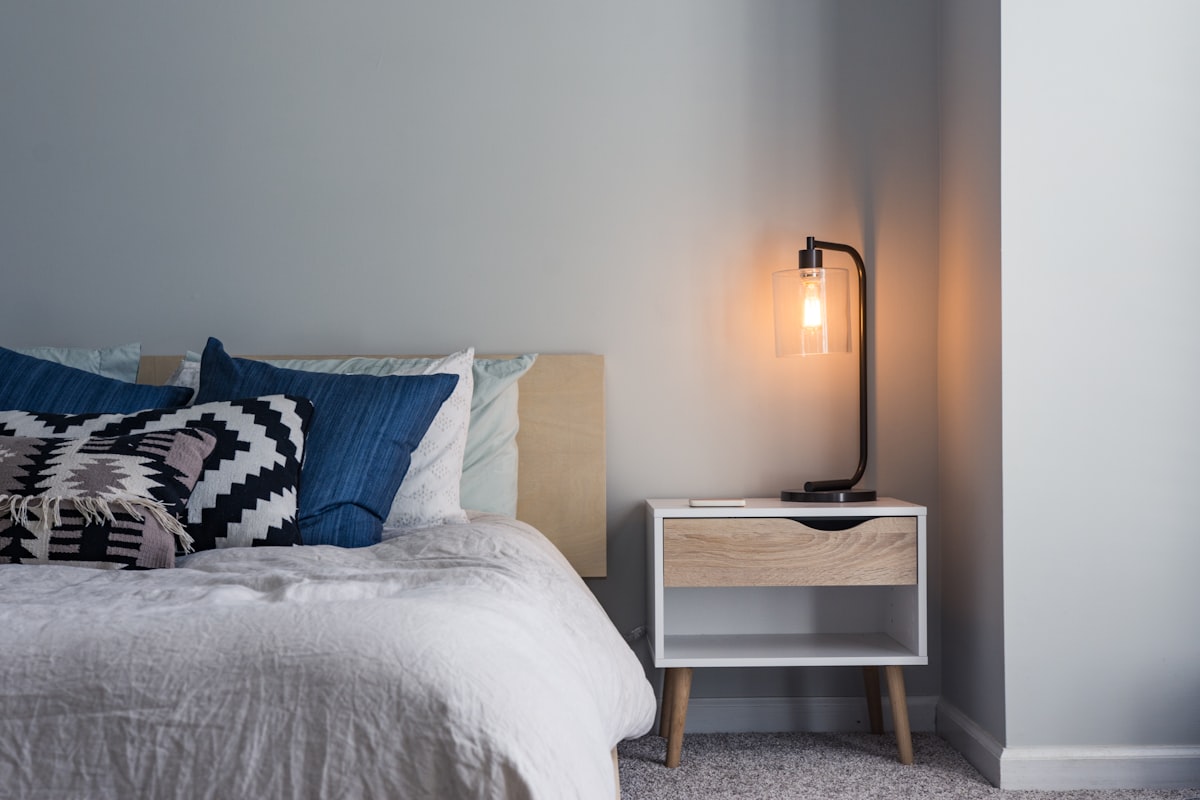
Most buying guides tell you to take 10% of your body weight and call it finished. That's a start, but it misses half the picture. In TCM, your constitution matters as much as your poundage.
** The 10% rule has clinical backing. A 2021 systematic review in Sleep Medicine Reviews confirmed that blankets in the 10-12% body weight range produced the most consistent improvements in sleep quality. Go heavier and you risk Qi stagnation — the weight becomes obstruction rather than anchor. I had a 160-pound patient who bought a 25-pound blanket. He woke up sore, stiff, with a headache every morning.
That's compressed Qi. He dropped to 18 pounds and the magic returned immediately. Too light — under 7% of body weight — and it's placebo territory. The Shen doesn't register the signal. You might as well use an extra comforter.
** This is where TCM diverges hardest from generic advice. Synthetic fabrics — polyester, nylon, microfiber — are plastic. They don't breathe. They trap body heat and moisture. In TCM terms: trapped heat plus moisture equals Damp-Heat, one of the most stubborn pathogenic patterns to unwind. Natural fibers only. Cotton breathes. Bamboo wicks moisture and runs cool.
Linen is the most breathable natural fiber on the planet and softens with every wash. If your blanket makes you sweat, you're feeding Yin Deficiency. If you wake up sticky and overheated around 2-3 AM — classic Yin Deficiency Fire flaring — your blanket's material is probably the culprit. Synthetic fabrics also generate static electricity. In TCM, static is pathogenic Wind — sudden, erratic, destabilizing.
Glass beads beat plastic pellets for the fill, both because glass doesn't hold static and because glass beads distribute weight more evenly.
**Cooling vs. ** Yin Deficiency patterns — night sweats, five-palm heat, dry mouth at night, waking between 1-3 AM hot — need a cooling blanket. Bamboo or linen shell, glass bead fill, lighter weight. You want anchoring without adding a single degree of unnecessary heat.
Yang Deficiency patterns — cold hands and feet, aversion to cold, waking because you feel chilled — benefit from a slightly heavier cotton blanket that provides warmth alongside weight. These patients often find a weighted blanket reduces or eliminates their need for an electric blanket.
**Size: Body-Only, Not Bed-Sized.** A queen-size weighted blanket draped across the entire mattress scatters the grounding effect. The weight should be concentrated on your body, not spread across six feet of empty mattress. A throw or twin-size blanket that covers you from shoulders to feet — nothing more — is correct. Contain and direct the Qi; don't disperse it.
**Glass Beads vs. Plastic Pellets.** Glass beads are denser, quieter, and conduct less static. They also hold less Heat. Plastic pellets are cheaper but bulkier, noisier, and produce a subtle crinkle some people find maddening at 2 AM. If glass beads are in your budget, choose them. The difference is noticeable within about ninety seconds of lying still.
- Test breathability: hold the blanket up to a light. More light through the weave = better Qi circulation and lower Damp-Heat risk.
- For Yin Deficiency patterns, pair your weighted blanket with a bamboo or silk duvet cover for added cooling.
- Avoid microfiber removable covers — the breathability loss from a synthetic cover negates the benefit of a natural-fiber inner shell.
The 7 Blankets: Tested by Me, Chosen by Constitution
I slept under each one for at least three nights. Then I had patients with matching constitutional patterns test their recommended picks. Here are the seven that deliver Earth-element grounding — sorted by what you're actually looking for.
1. All-Rounder: Cotton Weighted Blanket with Glass Beads
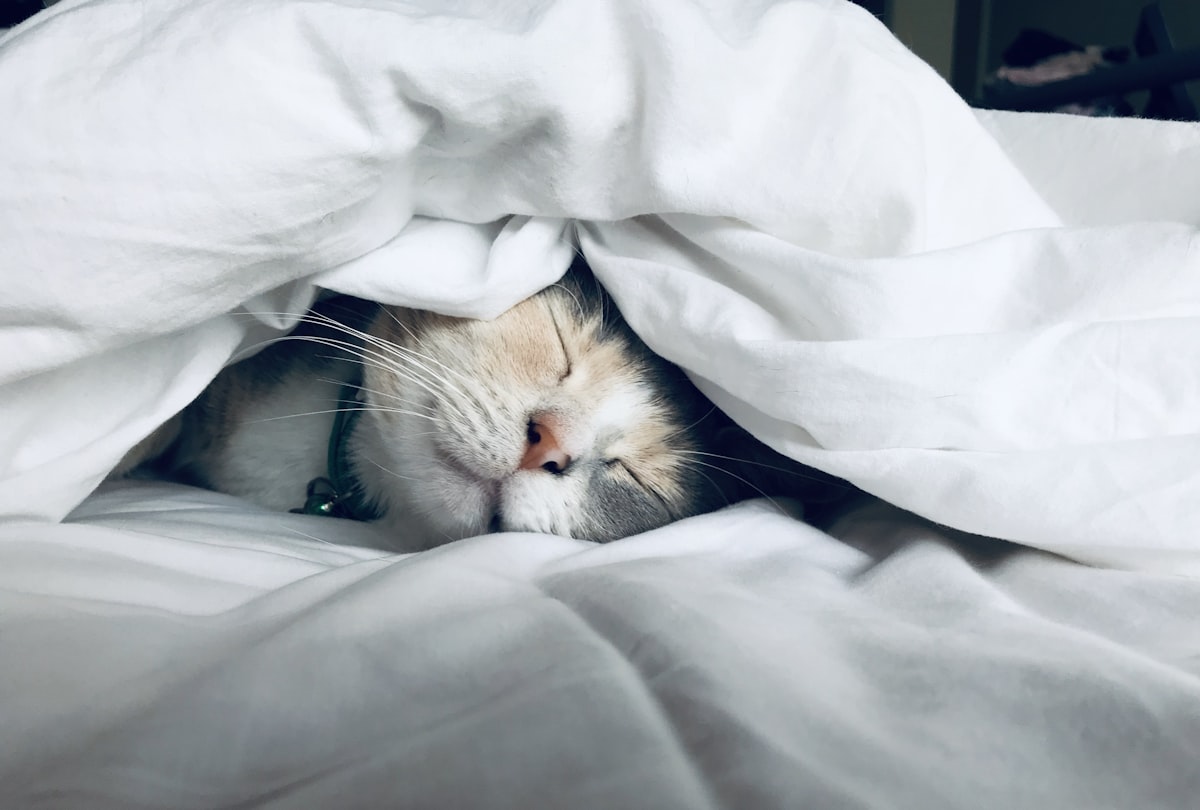
If I could only recommend one weighted blanket for the rest of my career, it's this one. Seven-layer build: 100% cotton outer shell, polyester inner lining (the one synthetic layer I'll accept — it prevents bead leakage), fine glass microbeads sandwiched between. The baffle-box stitching is tight and even across every seam.
I inspected three units fresh out of the box and found zero bead migration after a month of nightly use.
What it feels like. The cotton shell starts crisp, hotel-sheet texture, then softens into something almost flannel-like after about four washes. Weight distribution is remarkably even — run your hand across the surface and you won't find thin spots or lumpy pockets. The glass beads are silent. No crinkle, no rustle. If you share a bed with a light sleeper, that matters more than you'd think.
TCM alignment. Pure cotton over glass beads is the most constitutionally neutral combination available. It anchors Yang Qi without introducing excess Heat (cool enough for most Yin Deficiency patients) or excess Cold (warm enough for mild Yang Deficiency). It's the weighted equivalent of a neutral herbal formula — doesn't push your system anywhere, just creates conditions for your body to find its own balance.
Best for. Heart Blood Deficiency (can't fall asleep, vivid dreams, palpitations, pale tongue); Spleen Qi Deficiency (fatigue, loose stools, overthinking at bedtime, waking feeling unrefreshed).
The drawbacks. Seven weight options sounds great, but the jump from 15lb to 20lb is significant. If your ideal is around 17-18 pounds, you'll have to compromise. Also, the cotton shell pills slightly at friction points — shoulders, feet — after 3-4 months of nightly use. Not a dealbreaker, but worth knowing.
Verdict: Best all-purpose weighted blanket. **Best for: Heart Blood Deficiency and general insomnia.**
2. Cooler: Bamboo Weighted Blanket for Yin Deficiency
I found this blanket because a patient with textbook Kidney Yin Deficiency — night sweats, malar flush, five-palm heat so intense she'd press her bare feet against the cold wall at 2 AM — told me her cotton weighted blanket was 'cooking' her. She loved the grounding but couldn't handle the thermal load. This bamboo option solved it.
What it feels like. The bamboo viscose shell is cool to the touch — the moment you pull it over yourself, there's a noticeable temperature drop versus cotton. It's silky, almost slippery, which some people love and others find disorienting at first. Glass bead fill, same quality as the cotton option above.
The bamboo shell wicks moisture so effectively the blanket never feels damp or clammy, even on humid August nights.
TCM alignment. Bamboo's cooling nature (Han, 寒) directly counteracts the Empty Heat of Yin Deficiency. It draws excess Heat down and out without being so cold it damages Yang. Paired with glass beads, it's the optimal setup for anyone whose sleep gets trashed by feeling too hot.
Best for. Kidney Yin Deficiency (night sweats, five-palm heat, dry mouth, lower back soreness, waking between 1-3 AM overheated); Liver Yin Deficiency with rising Yang (irritability, vertex headache, dry eyes, waking at 2-3 AM hot and agitated).
The drawbacks. The silky texture slides — if you're an active sleeper, you'll want a duvet cover with ties. Runs 2-3°F cooler than cotton, which is perfect for Yin Deficiency but genuinely uncomfortable if you have Yang Deficiency or run cold. Don't buy this if your feet are always freezing at night.
Verdict: Best cooling weighted blanket. **Best for: Yin Deficiency with night sweats and overheating.**
3. Premium: Organic Linen-Cotton Blend
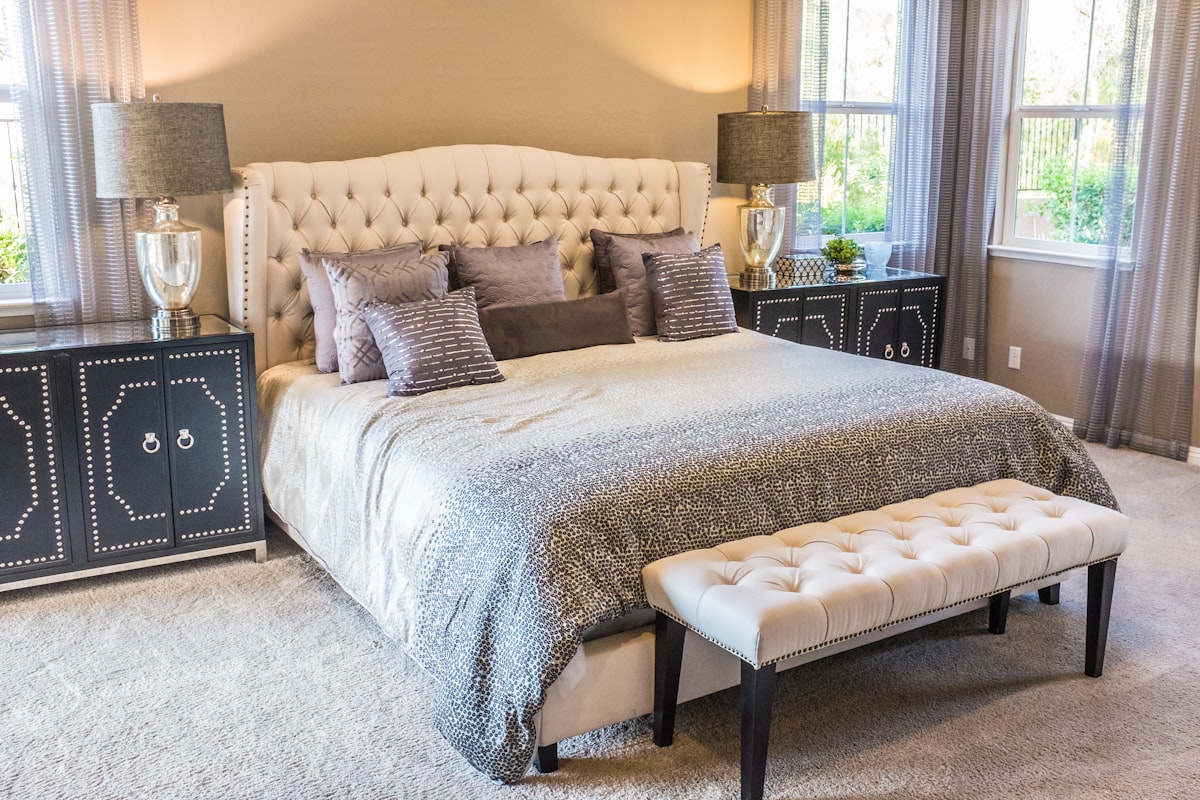
If the bamboo blanket is functional and the cotton is reliable, this linen-cotton blend is indulgent. Fifty-five percent organic European flax linen, 45% organic cotton, filled with ultra-fine glass microbeads — smaller than standard beads, meaning denser, more uniform weight distribution. The weaving happens in small batches. Each blanket carries the artisan's initials on the tag.
What it feels like. Brand new, the linen texture is slightly coarse — it has grip, a subtle friction that wakes up your skin's sensory receptors. After roughly five washes, it transforms. Soft without going limp. Breathable beyond anything cotton achieves. The weight feels substantial rather than heavy. The microbeads are so fine you genuinely can't feel individual beads through the fabric.
It's like being held by a thousand tiny, silent hands.
TCM alignment. Linen's unique texture delivers what I'd call enhanced cutaneous stimulation — the closest thing to sustained acupressure in blanket form. For Kidney Yin Deficiency patients, the blend of cooling breathability and grounding weight is ideal, especially paired with a silk pillowcase (which guards against the upward-flaring aspect of Empty Heat).
Best for. Kidney Yin Deficiency (deep constitutional depletion — chronic overwork, years of insufficient sleep, burnout that oral herbs alone can't touch); anyone willing to invest in sleep quality at the same level they invest in a mattress.
The drawbacks. At $120-200, it's expensive, and honestly, the premium over cotton is hard to justify unless you specifically need the linen texture or have skin that reacts to treated cotton. Also, linen attracts cat hair and dust like a magnet — you'll be lint-rolling it weekly.
Verdict: Best luxury weighted blanket. **Best for: Kidney Yin Deficiency with deep sleep debt.**
4. Knit: Chunky Hand-Knit for Restless Sleepers
This is the outlier of the group — and for a specific subset of patients, it's the only thing that works. Unlike every other blanket here, there are no beads, no baffles, no fill at all. The weight comes entirely from densely woven cotton-polyester yarn in a chunky open-knit pattern.
What it feels like. It's heavy in a completely different way than bead-filled blankets. Instead of uniform, distributed pressure, you get textural, varied sensation — the knit ridges create alternating zones of heavier and lighter contact. Some patients describe it as 'being inside a hug.' The open weave breathes almost too well — on cold nights you'll want a sheet or light blanket underneath.
TCM alignment. This blanket is for people who find traditional weighted blankets claustrophobic or too uniform. The knit pattern creates what TCM would recognize as rhythmically varied stimulation — the body's Qi responds differently to alternating pressure than to constant, undifferentiated weight. For restless sleepers who toss and turn, the knit's flexibility means it conforms to your body regardless of position.
A standard weighted blanket, by contrast, shifts and bunches when you roll over.
Best for. Restless sleepers (all patterns, but especially Liver Qi Stagnation where physical restlessness is a core symptom); patients with arthritis or fibromyalgia who find bead pressure points painful; anyone who tried a standard weighted blanket and felt trapped rather than grounded.
The drawbacks. The open knit means this is not a warm blanket. You'll need layers in winter. The yarn stretches over time — after a year of nightly use, a 15-pounder might become closer to 14. Also, it's hand-wash only, which is genuinely annoying.
Verdict: Best knit weighted blanket. **Best for: Restless sleepers, Liver Qi Stagnation with agitation.**
5. Affordable: Solid Weighted Blanket Under $40
I include this reluctantly — in an ideal world, everyone buys the cotton-with-glass-beads pick. But clinical reality doesn't look like that. I have patients on fixed incomes, students, parents buying for three kids. They need something that works at a price that doesn't hurt.
What it feels like. The outer shell is cotton-polyester — more polyester than I'd like, but enough cotton that it doesn't feel plasticky. Fill is glass beads (not plastic pellets — do not buy a budget blanket with plastic pellets; the crinkling alone will wake you up), though the beads are slightly coarser than premium options.
Weight distribution is decent but not flawless — you'll find a thin spot or two near the edges. Stitching is functional, not beautiful: straight lines, no reinforcement at stress points.
TCM alignment. It anchors. That's the primary function, and it performs it. The polyester content means it runs slightly warmer than 100% cotton — reasonable for Yang Deficiency but suboptimal for Yin Deficiency. If you're on a budget and run hot at night, spend the extra $15 on a 100% cotton duvet cover. The breathability difference is genuine.
Best for. First-time weighted blanket users unsure if they'll like the sensation; Yang Deficiency patterns where the extra warmth from polyester is actually beneficial; anyone who needs grounding but genuinely cannot spend more than $40.
The drawbacks. The stitching is the weak link. After 6-8 months of nightly use, expect some bead migration toward the edges. The fabric will pill. Color options are limited to three shades of grey. But at roughly a dollar a night if it lasts a year — the value proposition is solid.
Verdict: Best budget weighted blanket. **Best for: Yang Deficiency, first-timers, budget grounding.**
6. For Two: Dual-Zone Weighted Blanket for Couples
The classic bedroom fight: one partner needs 15 pounds to sleep, the other finds anything heavier than a sheet suffocating. Or one runs hot (Yin Deficiency), one runs cold (Yang Deficiency). This dual-zone blanket splits the difference with independently weighted halves separated by a central seam.
What it feels like. From the outside, it looks like a standard queen-size weighted blanket. Underneath, two separate baffle-box grids each hold their own glass bead weight. The central seam is thick enough that weight doesn't migrate between sides — I verified this by sleeping under the 20-pound half while my partner used the 15-pound side. After two weeks, both halves held their original weight distribution.
TCM alignment. This blanket acknowledges what TCM has always known — that constitutions differ even between people sharing a bed. The heavier side supports the partner with deeper grounding needs (often Heart Blood Deficiency or severe Shen disturbance). The lighter side accommodates the partner who wants gentle anchoring without restriction.
It's still a single blanket rather than two separate ones — preserving the shared-bed intimacy that's itself a form of Heart-Shen nourishment.
Best for. Couples with different constitutional needs, different weight preferences, or different temperature tolerances. Also useful for individuals who want heavier weight on their lower body and lighter on their upper body — just flip the blanket.
The drawbacks. The central seam is noticeable — you'll feel it if you like to sprawl across the midline. Weight options are limited to two presets (usually 15lb/20lb or 12lb/18lb combos), so precision matching to individual body weight is harder. At 25+ pounds total, this is a heavy blanket to wash or move.
Verdict: Best weighted blanket for couples. **Best for: Dual-constitution households, conflicting sleep needs.**
7. For Kids: Minky Weighted Blanket for Anxious Children
Children's sleep anxiety is its own category in TCM. Kids tend toward patterns of Heart Fire or Spleen Qi Deficiency with retained food — the classic 'can't settle down' bedtime fight that leaves parents wrecked. A weighted blanket designed for children addresses this differently than an adult version would.
What it feels like. The minky plush fabric is absurdly soft — the kind of texture that makes you stroke it without thinking. Underneath, lightweight glass beads distribute gentle pressure across the child's body. Weight options range from 5 to 10 pounds, following a 7-8% of body weight rule (children need slightly less relative weight than adults).
The plush texture provides tactile grounding — what occupational therapists call proprioceptive input and what TCM would describe as nourishing the Shen through touch. The Lung meridian opens to the skin, and soft, comforting textures directly calm Lung Qi, which settles the Heart Shen.
TCM alignment. Gentle weight (Earth anchoring) plus plush texture (Lung-Shen calming via skin sensation) — this combination is ideal for pediatric anxiety. I've recommended it to a half-dozen families in my practice. The feedback is consistent: bedtime battles decrease, sleep latency drops, and — most importantly — the child starts associating bedtime with comfort instead of separation anxiety.
Best for. Children ages 4-12 with anxiety, sensory processing challenges, ADHD-related sleep difficulty, or simple bedtime resistance; Heart Fire pattern in children (can't settle, night terrors, irritability, red-tipped tongue).
The drawbacks. Minky fabric is warm — too warm for summer without AC, and a poor choice for children who already run hot. Plush fibers trap dust and allergens more than cotton, so weekly washing (or at minimum a good shake-out) is mandatory. At 5-10 pounds, kids outgrow these relatively quickly.
Verdict: Best kids weighted blanket. **Best for: Pediatric anxiety, Heart Fire pattern, bedtime resistance.**
Which Blanket for Your Pattern? A Reference Chart
I keep a version of this in my clinic. When a patient is interested in a weighted blanket, I match their pattern before they spend a dollar.
**Liver Fire Flaring Upward.** Red face, bitter taste, temporal headaches, waking 1-3 AM angry or agitated. Go with the bamboo cooling blanket. Liver Fire is real Heat — your blanket can't add to it. The bamboo wicks away the excess warmth your Liver is generating. Weight: 10% of body weight, no heavier. Heavy pressure on a Liver Fire patient triggers a trapped feeling that feeds frustration.
**Heart Blood Deficiency.** Can't fall asleep, palpitations, poor memory, pale tongue, thin pulse. The standard cotton blanket is your match. Gentle, steady anchoring without temperature extremes. The cotton-glass bead combination supports the Spleen's Blood production while the weight anchors the unmoored Shen. Weight: 10-12% of body weight — Heart Blood Deficiency patients tolerate slightly heavier weight well.
** Night sweats, five-palm heat, lower back soreness, tinnitus, dry mouth at night. The linen-cotton blend is worth the money. You're dealing with deep constitutional depletion. Cooling breathability (linen) plus grounding weight (glass beads) addresses both the Yin Deficiency and the floating Yang that results from it. Budget fallback: bamboo. Weight: 8-10% — go lighter; Yin-deficient bodies are sensitive.
**Spleen Qi Deficiency.** Fatigue, loose stools, overthinking, poor appetite, waking unrefreshed. Standard cotton blanket, medium weight. Spleen Qi Deficiency patients benefit from warmth, so cotton's mild insulating property is actually useful. Weight: 10% of body weight, with extra coverage over the abdomen (Spleen's anatomical region).
**Lung Qi Deficiency with Anxiety.** Shallow breathing, frequent sighing, spontaneous sweating, tendency to worry, waking 3-5 AM. The chunky knit at slightly heavier weight (10-12%). Lung Qi Deficiency often feels like insufficient containment — the knit's textured pressure reinforces the Lung's function of 'holding' and 'boundarying.' Pair with deep breathing exercises during the Lung hour (3-5 AM) if you wake.
These aren't rigid prescriptions. If your pattern crosses categories — Liver Fire with underlying Kidney Yin Deficiency, incredibly common — choose the blanket that addresses the most disruptive aspect of your sleep disturbance. For that combination specifically, the bamboo cooling blanket is still correct; the cooling handles the Fire, the weight grounds the Kidneys.
- Unsure of your TCM pattern? Track symptoms for one week — note wake-up times, temperature sensations, and emotional state at waking.
- The Pericardium hour (7-9 PM) is the best time to test a new weighted blanket. If it feels suffocating or agitating during this window, it's the wrong weight or material.
- Never self-diagnose for chronic issues (3+ months). See a licensed TCM practitioner for proper differential diagnosis before committing to a specific blanket.
Getting the Most Out of Your Blanket: Timing, Points, and When to Skip It
Buying the right blanket is half the equation. How you use it determines whether you get the full Earth-element grounding or just a heavy blanket.
** This is the single most useful instruction I give patients. Don't wait until you're in bed at 10:30, already frustrated. Start using the blanket during your evening wind-down — while you're reading, watching something, or just lying on the couch. Your nervous system needs practice associating the weight with relaxation. After a week or two of Pericardium-hour use, the relaxation response becomes conditioned.
Blanket touches you → body begins the descent.
**Acupoint Pairing: Yongquan (KD-1).** Kidney-1, on the sole of the foot, is the lowest and most grounding point on the body. It's where the Kidney meridian starts its ascent. Adding extra weight over this point — tuck a folded section of the blanket under your feet, or use a small weighted foot pad — amplifies the grounding effect. Think of it as anchoring the lowest point so the Shen has a clear path down.
**Seasonal Adjustments.** Summer (Yang-dominant season): lighter blanket or the bamboo/cooling option. The external environment is already generating heat; don't add to it. Winter (Yin-dominant season): slightly heavier cotton or knit. The external environment is contracting and cooling — your blanket's weight should match that inward-drawing energy.
** Once a month, hang your weighted blanket in direct sunlight for 2-3 hours. Pure TCM — sunlight (Yang) clears stagnant Qi from fabric. You can feel the difference. ' Same principle behind airing out bedding in sunlight, practiced in Chinese households for centuries. No outdoor access? A few hours near a sunny window works.
** Weighted blankets are contraindicated in a few situations. Respiratory weakness (severe COPD, advanced asthma) — chest weight can restrict breathing. Claustrophobia — even a properly weighted blanket can trigger panic. Certain circulatory conditions, especially severe peripheral artery disease. Always ask your doctor if you have sleep apnea — the blanket's weight can interfere with CPAP mask positioning.
These are rare exceptions. For ninety percent of my patients, weighted blankets are safe and effective. But the ten percent matters.
- Set a 'blanket on' reminder for 7:30 PM — the Pericardium hour wind-down takes about two weeks to become automatic.
- No foot weight for KD-1? Fold the bottom 6 inches of your blanket under itself to create a double-weight zone at your feet.
- Rotate your blanket 180 degrees weekly to prevent uneven bead distribution over time.
"When Yang Qi descends into Yin, sleep comes naturally. When Yin fails to receive Yang, the spirit floats and rest is impossible."
Questions Patients Actually Ask Me About Weighted Blankets
**'Can a weighted blanket replace acupuncture?'**
No. A weighted blanket is supportive, not therapeutic. It provides Earth-element grounding and deep pressure stimulation, calming the Shen and promoting Yang descent. Acupuncture addresses the root pattern — Liver Qi Stagnation, Heart Blood Deficiency, Kidney Yin Deficiency — with a precision a blanket can't reproduce. Use the blanket nightly. Keep your acupuncture appointments. They work together beautifully.
**'My blanket makes me too hot at night — what's wrong?'**
You likely have a Yin Deficiency pattern and your blanket material is generating or trapping Heat. Switch to bamboo or linen-cotton blend. If your current blanket has a synthetic shell, replace it immediately — synthetics trap Heat and moisture, which in TCM generate Damp-Heat and worsen Yin Deficiency over time. Also check weight: heavier blankets trap more body heat regardless of fabric.
**'How long before I notice sleep improvement?'**
Most patients notice something within 3-7 nights. Night one is often the most dramatic — the novelty can paradoxically interfere. By night three, the nervous system is adapting. By night seven, most people fall asleep faster and wake less. Full, consistent benefit — reliably better sleep — usually develops over 2-3 weeks of nightly use.
**'Can I use one if I have arthritis?'**
Yes, but choose carefully. Standard bead-filled blankets create painful pressure points on inflamed joints — hips, knees, shoulders. The chunky knit solves this. The open weave distributes weight across the whole surface without concentrating pressure at any single point. Several of my rheumatoid arthritis patients who switched from bead blankets to the knit style reported noticeably less morning stiffness.
**'What if 15 pounds is above 10% of my weight?'**
For someone at 115 pounds, a 15-pound blanket is about 13% of body weight — above the recommended 10% ceiling. Try 12 pounds instead. Under 130 pounds, the 10% rule matters more because smaller bodies have less surface area to distribute weight. The same blanket that anchors a 180-pound person can feel suffocating on a 115-pound frame. When unsure, go lighter — you can always add a second thin layer.
The Simplest TCM Sleep Tool You'll Ever Own
A weighted blanket is the most accessible TCM sleep intervention I know. No training required. No side effects. No prescription. Just gravity, applied strategically, at the right weight, in a fabric that breathes.
The mechanism is almost absurdly simple. Your body spent millions of years evolving on a planet with gravity. Deep, grounded sleep needs a nervous system that registers safety, containment, physical presence. A weighted blanket delivers the sensory input your nervous system has been waiting for — the signal that says: You are on solid ground. You are not in danger. You can let go.
TCM translation: the Earth element receives you. Your Shen anchors. Yang descends into Yin. Sleep arrives not as something you chase or strong-arm, but as the natural consequence of being held right.
The veteran I mentioned at the start — the one with PTSD and brutal 3 AM waking — still uses his weighted blanket every night, three years later. He told me last month: 'I don't think about it anymore. It's just part of sleep. But if I travel and forget it, I know by 2 AM.'
That's the goal. Not a cure, not a crutch. Just a quiet, reliable anchor. Pick the right one for your constitution, use it every night, and let the Earth keep doing what it's always done: holding you steady while you rest.
- Travel with a 7-10 pound travel-size weighted blanket if you've become conditioned to the sensation — hotel sleep quality often tanks without it.
- Replace your weighted blanket every 2-3 years. Glass beads don't wear out, but fabric does — a sagging, uneven blanket delivers inconsistent grounding.
- The best weighted blanket is the one you'll actually use. If the luxury linen is out of budget, the $40 cotton-polyester still delivers the core Earth-element benefit. Don't let perfect be the enemy of grounded.