The Door Is the Problem
Nobody fails the post-meal walk because it is hard. It fails because it is inconvenient at the exact moment inconvenience is most persuasive: 7 PM, dishes still on the table, a full stomach arguing for the couch, and outside either darkness, rain, or mosquitos depending on the month.
The walk costs nothing, which is precisely why it loses — there is no sunk investment to feel guilty about abandoning, no membership fee quietly expiring.
So this is a gear list with an odd philosophy. Every item here exists to delete friction at that one moment, not to make the walk better once you are already doing it. ' before the couch finishes its pitch. ' before the question is fully asked. A walking pad converts the rain excuse into an indoor version of the same ten minutes. The tools do not walk for you.
They shorten the distance between finishing dinner and being in motion, and for a behavior this cheap, ninety seconds of saved friction is the entire ballgame.
The evidence that the ten minutes are worth this trouble sits in the next section, and it is stronger than most people assume: timed post-meal walks outperforming longer untimed exercise for blood sugar, and step counts tracking mortality risk across cohorts of tens of thousands. But first, the disclaimer that belongs at the top of any gear list for a free activity. Walking requires nothing.
A person with working legs and a hallway owns every tool on this list in primitive form. If buying equipment becomes a substitute for starting, the equipment failed — and that failure mode is common enough that I would rather name it up front than after your parcel arrives.
"The Spleen governs the limbs."
What Ten Minutes After a Meal Is Worth
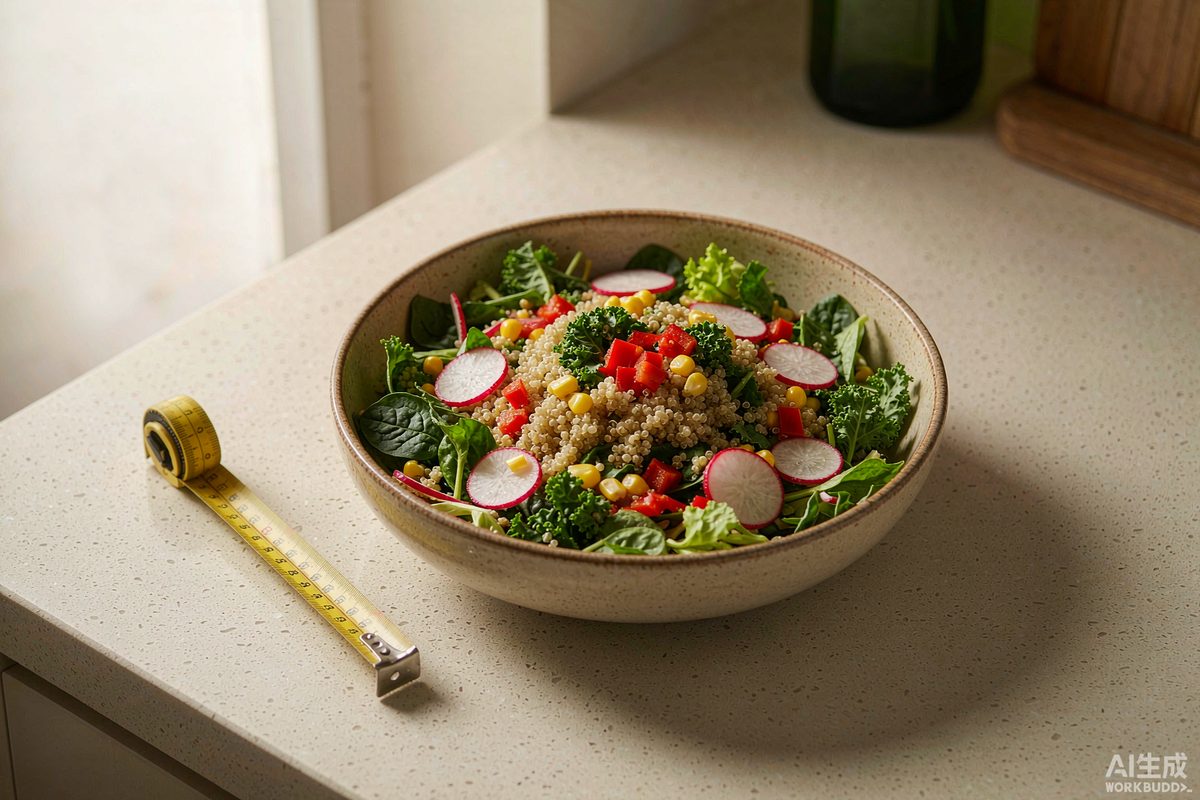
Two numbers frame what a small walking habit is actually worth.
The first comes from the 2013 Diabetes Care trial. Older adults with impaired glucose tolerance who split their walking into three fifteen-minute post-meal bouts improved twenty-four-hour glucose control significantly more than peers doing one sustained forty-five-minute walk — same total dose, different arrangement. The post-dinner bout did the heaviest lifting.
Ten minutes is not a token dose; aimed at the right window, it beats forty-five unaimed ones.
The second number is bigger. In 2022, the Lancet Public Health published a meta-analysis of fifteen international cohorts — over forty-seven thousand participants — tracking daily steps against all-cause mortality. Risk fell steadily with more steps and, for adults over sixty, plateaued around six to eight thousand a day; for younger adults, around eight to ten thousand. The striking part is the low end.
Most of the mortality benefit arrived before anyone did anything heroic. The difference between four thousand daily steps and seven thousand is enormous; the difference between ten thousand and fifteen is nearly nothing. A couple of ten-minute walks contribute a few thousand steps and move a person meaningfully up that curve.
Pedometers carry trial evidence of their own. The 2007 JAMA systematic review by Bravata and colleagues found that pedometer users increased physical activity by roughly two thousand steps a day over their own baseline, with improvements in blood pressure and other markers riding along. The counter on the waistband was itself the intervention.
The honest limits, stated once and kept: the glucose trials measure glucose rather than weight or life length, the cohorts show association rather than causation, and no step count guarantees any individual an extra decade. But for a free, low-risk habit, the evidentiary wind is unusually strong.
- Most of the mortality benefit in the cohorts arrives by six to eight thousand steps for older adults - well within reach of two short walks plus ordinary daily motion.
- Pedometer users in the JAMA review added about two thousand steps a day without any other intervention. Visible counts change behavior.
- The timed walks in the trials beat longer untimed exercise. If you only walk once, walk after your largest meal.
Tool 1: A Pedometer That Only Counts Steps
Start with the dumbest device on the list, because for this job it might be the best one.
A basic 3D pedometer — a matchbox-sized clip unit with a single large number on it — does one thing: it counts steps and shows them to you without a phone, an app, a Bluetooth pairing ritual, or a charging cable every four days. Clip it on in the morning, glance at it after dinner, and you know whether today deserves the walk. The display is legible at arm's length. The battery lasts months.
Mine cost less than a pizza.
The case for dumb here is behavioral, not technical. Phone-based step counting technically works, but the number lives behind an unlock ritual, next to forty other temptations, and checking it at 7 PM is how people end up back in the exact chair they meant to leave. The pedometer's number has nowhere to hide.
It sits in your peripheral vision being true, and the 2007 JAMA review suggests that merely visible step counts change behavior — users across those studies added on the order of two thousand daily steps with no other intervention at all.
Honest notes, since accuracy claims on the packaging deserve deflating: consumer pedometers run five to ten percent off at normal walking speeds, do worse if you push a stroller or walk with your hands in your pockets, and undercount on very slow strolls — which, let us be clear, is exactly what post-dinner walking is.
Treat the number as a relative signal, more than yesterday or fewer, rather than a laboratory measurement. If the device's real job is to make the after-dinner decision before the couch makes it, a rough count is entirely sufficient.
- Choose a model with a display readable in daylight and a clip that survives hip-level bumps. Pocket units get sat on, sat on, and left in the wash.
- One number is the feature. Every additional metric on a pedometer is a subscription the manufacturer forgot to charge for.
- Set it on a shelf by the toothbrush at night - pairing the clip-on moment with an existing morning reflex removes the last forgetting.
Tool 2: The Band That Nags You at Seven
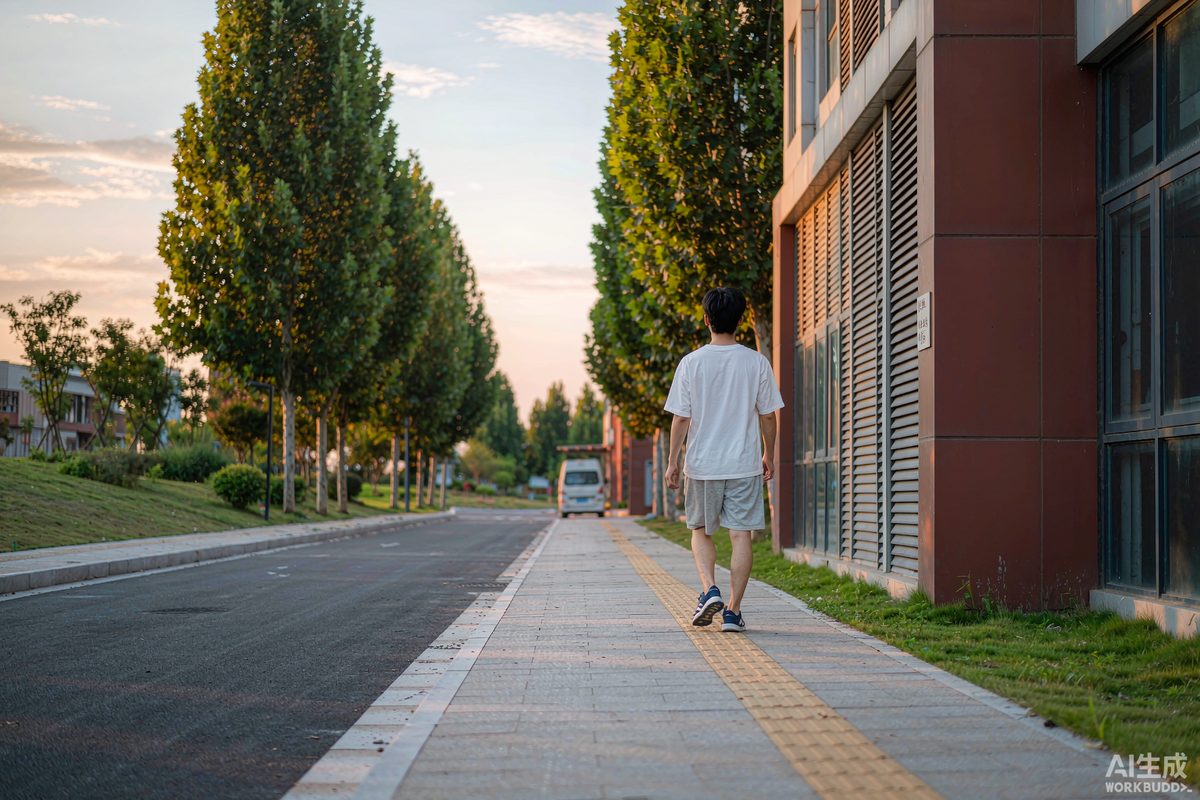
Tool two is the upgrade: a band or watch with a step counter, a move reminder, and ideally nothing else you pay attention to.
The advantage over the pedometer is the nag. Most trackers will fire a timed alert — set it for twenty minutes after your usual dinnertime, and the device asks the question so you do not have to. For the first few weeks, while the habit is still a decision rather than a reflex, the nag does real work.
Many will also log the walk as an activity automatically, which scratches whatever itch the brain has for a completed record, and a few even estimate the glucose-friendly light-intensity minutes your cardiologist keeps asking about.
Now the honest counterweight, because I have watched this backfire more than once. The band is a step from the pedometer toward a number that follows you everywhere, and for a certain temperament the number becomes the point — closing rings at midnight, pacing the hallway to round up, genuine distress when a sick day zeroes the streak. There is now a clinical name for that pattern, and it is not a joke diagnosis.
If your relationship with metrics runs obsessive, buy the pedometer and skip this tool. The post-meal walk is supposed to be the least dramatic ten minutes of your day.
For everyone else, the shopping notes are short. You want a step count and a schedulable alert; heart rate, sleep staging, and blood-oxygen readings are extras you will stop opening within a month. Battery should exceed five days, or you will resurrect the very charging friction the pedometer was hired to eliminate. And strip the notifications to zero.
The band's job is two sentences a day — did you move, and do you want to — not a dashboard.
"The tool that prompts the walk is good. The tool that makes the walk about itself is not."
Tool 3: The Walking Pad for Dark and Rainy Evenings
The walking pad is the extravagance on this list, and in a rainy climate it earns its footprint.
The pitch is simple: a narrow, motorized belt — most top out near six kilometers per hour, which is a brisk walk — that lives under a desk or against a wall and lets you log the ten minutes indoors, in socks, in front of a screen. Post-dinner walking at two to three kilometers per hour is precisely the light intensity the glucose trials used. The machine does not care that the weather is a monsoon.
Dinner ends, belt starts, episode plays, ten minutes pass. The spike gets intercepted and you never saw the rain.
Now the honest column, because the return rate on these things tells its own story. Decent units start around two hundred dollars and the good ones weigh twenty kilos or more, so 'just tuck it away' assumes you have a genuine corner for it, not a fantasy one. Budget models develop belt squeak within months; read the recent reviews rather than the star average.
Walking at 7 PM on hardwood above a downstairs neighbor is a diplomatic event — noise is the most-cited reason for returns. And every owner eventually meets the same failure mode: the walking pad is the single most comfortable garment-drying infrastructure ever devised. If it spends February draped in jeans, it has become a rack, and racks do not intercept glucose curves.
Who should skip it: anyone with a covered loop nearby, anyone in a small flat already short on floor, and anyone whose knees object to even gentle belt walking — an upright stationary bike serves the same post-meal slot more quietly and costs less. Who should buy it: the person whose walk died last November and has not been seen since.
- Check the noise spec and the reviews mentioning apartments specifically. Your neighbors hear more of the belt than you do.
- Two to three kilometers per hour is the target speed - if you are sweating, you have drifted out of the light-intensity zone the trials used.
- Give the pad a hard rule about laundry immediately, or it will make that decision for you.
Tools 4 and 5: Shoes and Socks That Remove Friction
Tools four and five are the oldest technology on the list, and they are the reason more walking habits die than weather ever killed.
Blistered heels end a walking routine faster than any gym closure, and cheap socks are the usual culprit. A pair of cushioned walking shoes kept exclusively for the after-dinner loop, plus merino or synthetic socks that pull sweat off the skin instead of soaking it, removes the most common physical complaint before it starts. Keep them by the door — the visual is half the point.
' into 'oh, they're right there,' and that one-second difference decides most evenings. The TCM regimens would recognize the trick: they build the walk into the architecture of the day so that no act of will is required at the moment of low willpower.
Honesty about spending, though. A ten-minute stroll at conversational pace does not require a hundred-and-sixty-dollar technical runner, and the walking-shoe market is happy to imply otherwise. What the walk actually needs from a shoe: a flexible forefoot, some cushion under the heel, room for toes to spread, and no break-in period.
If your current trainers meet that description, they are your walking shoes and this tool is already installed. Budget forty to seventy dollars otherwise, and replace them when the tread goes smooth under the big toe, which is the first place walking wear shows.
One refinement worth copying from daily walkers: rotate two pairs. Foam midsoles compress and need the better part of a day to rebound; alternating means every walk starts on full cushion. Blisters hate variety as much as feet do.
"Constancy over intensity: the regimen that asks little and happens daily outlasts the one that asks much and happens twice."
The Small Stuff: Umbrella, Warm Water, and a Queued Episode
The last tools are almost embarrassingly small, which is exactly why they work.
A compact folding umbrella lives on the doorknob. Permanently. Not in a bag that needs finding — on the knob your hand touches every single time you leave. Rain executed my own walk for three consecutive Novembers before an umbrella on the doorknob ended its reign. ' It was 'finding the umbrella is a task,' and tasks die at 7 PM.
The water bottle carries the TCM rider. Carry warm water, not iced — the Spleen's classical preferences run warm, and a sip of something hot on a slow loop is its own small ritual that makes the walk feel less like medicine being administered. A small insulated flask in the cold months, room-temperature water otherwise. This is the gentlest item on the list and the only one the classical texts explicitly endorse.
And the episode queue is temptation engineering. Choose one series you are only allowed to watch while walking — not on the couch, not during dinner. Behavioral economists call it temptation bundling, and television accidentally proved the concept when podcasts and streamed dramas helped make walking one of the most popular forms of exercise in several countries. The walk becomes the admission ticket.
Ten minutes is roughly half an episode, which conveniently leaves the resolution for tomorrow's loop, and there is your hook — the same hook that made serialized radio a walking companion two generations before the word 'fitness' got attached to any of this.
Umbrella, flask, queued episode: total spend under thirty dollars, and in my own Novembers these three did more than anything with a motor in it.
- The umbrella goes on the doorknob the day it arrives. In a drawer, it is a different object.
- One episode, walking only. If the series is watchable from the couch, the couch wins - the restriction is the entire mechanism.
- Warm water in winter, room temperature in summer. Iced drinks sit oddly with both the Spleen and a post-meal stomach.
What I Would Skip, and Where the Evidence Stops
What I would leave on the shelf, so nobody buys it on my account. Smart scales that graph body-fat percentages daily: daily weighing suits some temperaments and poisons others, and it is the wrong instrument for a habit whose benefits show up in glucose curves, not morning numbers. Posture correctors worn while walking: the walk is not a posture drill, and elastic reminders chafe over fifteen minutes.
'Toning' and rocker-sole shoes: the claims outran the trials years ago, and an unstable sole on a dark loop is a small ankle lawsuit waiting for its hearing. Trekking poles on flat neighborhood pavement: lovely in the Alps, theatrical outside the supermarket. Every one of these converts a simple habit into a project, and projects get postponed.
Where the evidence actually stops, stated plainly. The timed-walk trials enrolled dozens of participants for weeks and measured glucose control, not weight, and not mortality. The step-count meta-analyses are observational cohorts — enormous, consistent associations, but associations.
And no device in this article has clinical-trial evidence for its own particular plastic: the trials tested walking, and the tools merely smuggle you into the walking arm of the study.
The frame I keep coming back to is the old one. Sun Simiao's regimen treats the after-meal stroll as part of the ordinary architecture of a day — unremarkable, listed beside warm food and regular hours, worth doing for the rest of your life precisely because it asks so little. The gear above is just architecture too: a count you can see, shoes you can find, a belt for the rain.
Buy the one that matches your actual excuse, then let the whole apparatus fade into the furniture. The ten minutes were never supposed to feel like an event. That was the point.
"After eating, walk slowly and with an easy mind; let it be as unremarkable as the meal itself, and it will outlast every resolution."