The Room With Mirrors Is Not the Only Option
Ask why heavier adults don't exercise and you rarely hear 'laziness' from the people themselves.
A 2024 systematic review of qualitative studies gathered what overweight and obese adults actually say about physical activity, and the transcripts read like a list of architecture complaints: gym spaces that feel exposed, equipment rated for smaller bodies, staff who hover or ignore, clothing that doesn't survive a workout at any price, and the standing fear of being filmed, commented on, or corrected by a stranger.
The review's quiet conclusion is that the barriers are situational — built, therefore buildable-around.
This article takes that conclusion literally. Instead of arguing for courage in hostile rooms, it goes where the barriers aren't: your own floor, at whatever hour you like, with equipment that was rated for your body before you walked in.
Three picks, each addressing a different failure point — the seat, the shoe, and the strength tool — and each chosen for the boring, decisive question that fitness marketing never asks: will this still be in use two years from now?
A word on what this list is not. It is not medical clearance; joint replacements, cardiac histories, and unexplained pain belong with a physician first. And it is not a weight-loss promise. The gear below is chosen to make movement possible and repeatable, which the evidence supports as its own reward regardless of what the scale does afterward.
It is also worth saying who is writing. We are researchers and writers, not coaches, and none of these three picks were tested by us at 300 pounds — the load-rating claims come from manufacturers and from buyer reviews, cited as claims.
What we did vet is the paper trail: the published failure patterns for each category, the complaints that recur across review sections, and the research on which barriers each piece of equipment actually addresses. Where the evidence about a product type is thin, the pick leans on the mechanism — a wider seat addresses a documented barrier, a wider shoe addresses a documented foot — and says so plainly.
Readers deserve the difference between tested and reasoned, especially in a market that thrives on conflating them.
- The barriers in the qualitative research are environmental, not motivational — which means you are allowed to route around them instead of over them.
- Whatever you buy, clear a permanent spot for it tonight. Equipment in closets does not have adherence rates; it has funerals.
"Nobody ever quit because the workout was too hard at home in socks. They quit rooms, not workouts."
What the Evidence Says About Starting
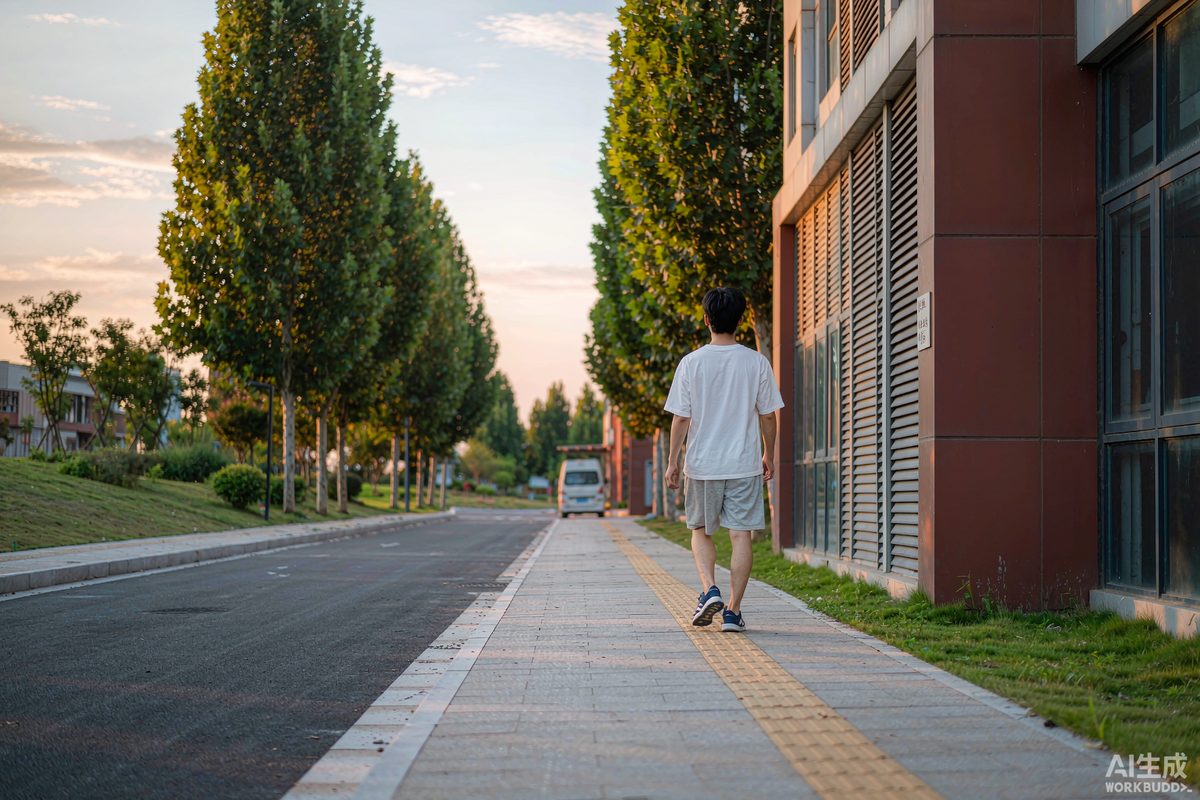
The dose question has an official answer. The American College of Sports Medicine's 2009 position stand reviewed the intervention trials and put the effective range at 150 to 250-plus minutes of moderate activity per week for modest weight loss, with more needed for clinically significant loss and for keeping any of it off.
That number defeats most beginners on contact, which is why the second half of the document matters more for this audience: the position stand's own progression advice starts people well below the target and climbs slowly, because adherence — not intensity — is the variable every failed program dies of.
The intensity advice got an unexpected ally in 2009. ' For public health, his argument ran, the self-selected pace is not a compromise. It may be the whole mechanism.
Put those two documents together and this article's logic falls out on its own: moderate, self-paced, at home, on equipment that fits. Not because that maximizes any one workout. Because it maximizes the count of workouts, and the ACSM's own numbers say the count is where the results live.
- Ignore any program that starts you above 'conversational pace.' If you can't talk through it, your body files it under threat, and the repetitions stop.
- Track minutes per week, not calories. The ACSM's thresholds are written in minutes — so is the progress that reaches them.
"The prescription that survives is the one that stays pleasant. Physiology wrote that finding, not a marketing department."
How We Picked: Load Ratings, Widths, and Honesty
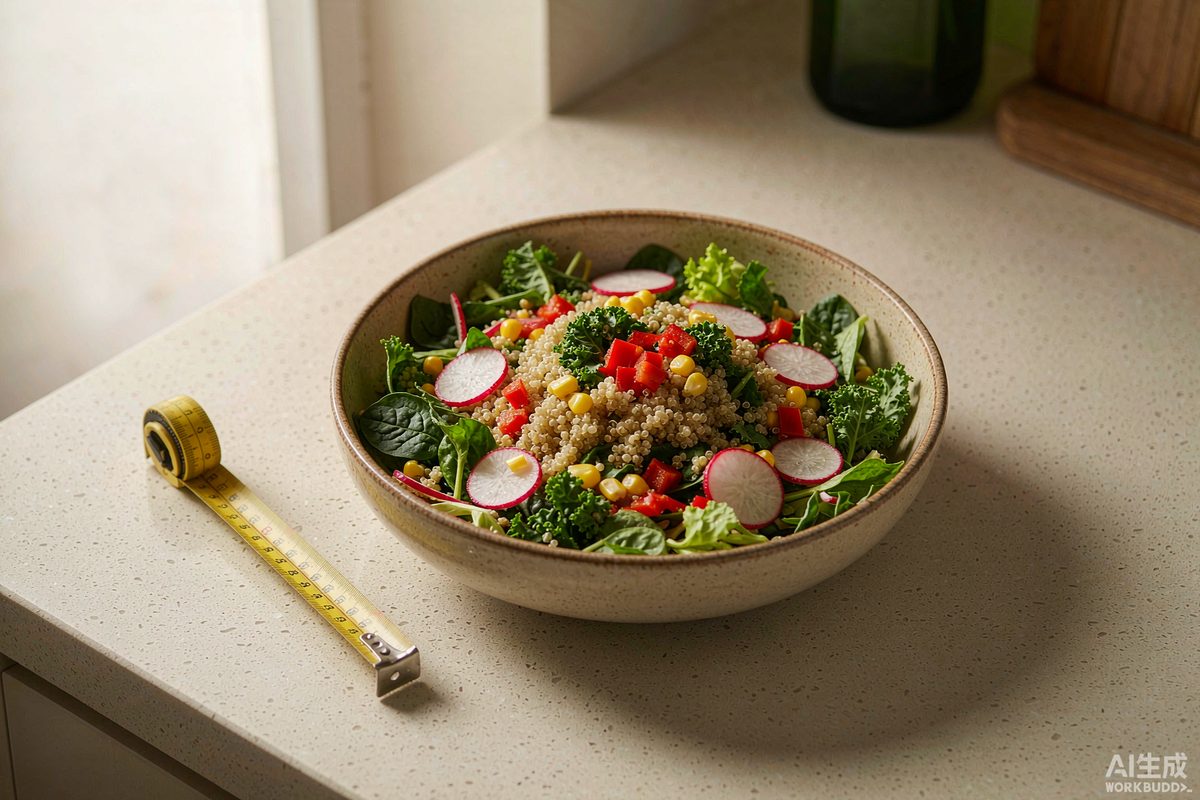
The selection rule for heavier users is blunt: the spec sheet outranks the marketing page. Every pick below publishes a weight capacity or a width grade, and we treated those printed numbers as the price of entry rather than a bonus feature. A recumbent bike rated 300 pounds that wobbles at 260 is a 260-pound bike; wide 'fits most' shoes that run narrow are narrow shoes.
Reviews from buyers above 250 pounds carried more weight in our picks than any editorial score, because the failure modes — creaking frames, seat rails, collapsed midsoles — only report for duty at load.
The second rule: low entry intensity. Each item had to start its resistance or cushioning genuinely soft, since 'beginner' in fitness retail often means 'beginner who is already fit.' The third: no audience required. Everything here works at home, at dawn, in whatever you already own, which is not a lifestyle statement — it is the adherence strategy the qualitative studies point to.
What we left out matters too. Treadmills earned no slot because walking outside or on a cheap pad does the ACSM job without a motor to maintain; standing desks, kettlebells, and vibration plates all have their partisans but none solves a barrier as specifically as the three below.
No single pick pays this site a commission different from any other link — the tag attached to each link is the same, and none of it changes which items earned slots. The ratings did that.
- Before buying anything rated for your weight, read the 2- and 3-star reviews from buyers near your size. The truth about a frame lives there.
- Measure twice: the bike's footprint against your floor, and your foot's width against the shoe's last. Returns cost the environment and your momentum.
"Marketing says what a product aspires to. The spec sheet says what it forgives. Heavier buyers should read the second document first."
The Tradition's Version: Movement Scaled to the Person

The opening chapter of the Huangdi Neijing sketches its picture of the long-lived ancients with a phrase easy to scroll past: they lived by method, harmonizing with the arts of cultivation — 和于术数. The arts in question were the exercise and breathing disciplines of the day, and the load-bearing word is the verb: harmonizing.
Movement was to be matched to the person and the season, a prescription scaled to the individual body rather than a performance scaled to an audience. There is no chapter in the classical corpus that grades anyone's workout.
The same text balances the ledger from the other side. Its catalog of the five overtaxations names 'prolonged sitting injures the flesh' — 久坐伤肉 — treating stillness not as a neutral default that exercise occasionally interrupts but as an injury in progress, tallying its own bill in the Spleen's domain, the flesh the tradition assigned to the organ that transforms food.
Chapter 23's list is worth reading as a whole precisely because its injuries are ordinary: too much looking, lying, sitting, standing, walking. The classical medicine worried about dose and duration long before biostatistics existed to compute them.
And the tradition had its own equipment. The Zhen Jiu Da Cheng records Zusanli, the point a three-li march up the lower leg, as the traveler's point — pressed, warmed with moxa, and strengthened before long effort, an endurance ritual for bodies about to carry themselves somewhere far.
Between the classics and the ACSM position stand lies twenty-three centuries, and both documents agree on the part beginners most need to hear: the body keeps score on regularity, not spectacle.
- Borrow the classical verb: harmonize. Match the intensity to your Tuesday self, not your someday self.
- The 'sitting injures the flesh' line gives you a modern use: standing up once every half hour is classical medicine, not a productivity hack.
"The ancients harmonized with their arts of cultivation. Nobody in the Suwen is being compared to anyone else in the Suwen."
The Recumbent Bike: The Chair That Doesn't Fight You
Of everything in home fitness, the recumbent bike has the least glamorous reputation and the best adherence story for heavier beginners, and the two facts share a cause. The design hands you a bucket seat with a backrest, places the pedals forward of your hips instead of beneath them, and lets you enter through an open frame rather than over a crossbar.
Balance — the quiet fear that keeps many heavier riders off upright bikes entirely — stops being part of the experience. The seat is wide enough to sit in rather than perch on, and the step-through frame asks nothing of knees, hips, or dignity.
Buy on three specs. Rated capacity: 300 pounds is the working minimum, 350-400 better, and the number is printed because the frame means it. Resistance floor: magnetic resistance starting near-zero, so a recovery-pace ride is actually available on day one. And the crank: two-piece or three-piece assemblies survive; the one-piece cranks on the cheapest bikes are the known failure point under real load.
Expect a footprint the size of a reading chair and a noise level that tolerates television.
Two setup notes that reviews consistently under-deliver. First, stability outranks smoothness: check the bike's minimum rider height as well as the maximum weight, because a tall rider on a short frame gets knee travel the designers never planned for.
Second, level the feet before the first ride — a bike rocking on an uneven floor multiplies frame stress in a way no capacity rating anticipated, and the fix is a ten-dollar shim, not a return shipment. Neither note appears in the marketing. Both appear in the one-star reviews, which is where all honest equipment research lives.
The honest limitations: it burns fewer calories per hour than an upright at the same perceived effort, and boredom is the maintenance problem — solved with headphones, not willpower. Against that, the ACSM's arithmetic: the machine that gets ridden 200 minutes a week at moderate pace beats the machine that would burn more but lives in the garage as a drying rack. Adherence is the multiplier.
Everything else is a coefficient.
- Check the seat post and pedal-arm specs before checkout — they're the failure points, and the fix is a mid-tier model, not luck.
- Put the bike where you already spend time. A bike facing a wall in a spare room is furniture; a bike facing a window or a TV is a habit.
"The best cardio machine for a heavier beginner is the one whose seat never once reminded them of the waiting room."
Wide-Width Walking Shoes: The Cheapest Gear That Matters
Every serious plan for a heavier beginner is, at bottom, a walking program with decorations — and walking dies at the shoe. Feet under high load spread wider and longer with each stride; standard-width lasts were not drawn for them, and the friction budget of a pinching shoe runs out fast.
The result has a familiar shape: a blister, a hot spot, an aching arch, and a plan abandoned not because walking failed but because the interface did. Wide-width walking shoes — 2E and 4E grades, listed for men and women — are the cheapest fix in this entire article and the one with the highest odds of being worn daily.
Fit beats brand. Shop in the late afternoon, when feet are at their daily widest; allow a thumb's width past the longest toe; and insist on a heel counter that doesn't fold under thumb pressure. Cushioning matters more at higher load — each step is a bigger impact, absorbed by the same midsole — but beware the marshmallow feel, which compresses to nothing within weeks.
Firm, generous, and sized honest wins over soft and narrow. Replace by mileage, around every 300-500 miles, since midsoles die from the inside out where no eye can audit them.
The width penalty compounds in a way sizing charts hide. A foot that overflows its last doesn't just blister — it slides inside the shoe, toes grip to compensate, and the gripping rewrites your gait by the end of the block. Bunions, plantar fascia complaints, and the general conviction that walking is not for you all follow from an interface drawn for a narrower foot.
Podiatry clinics see the downstream version of this daily; the footwear aisle rarely connects it. If you have spent years assuming you hate walking, try the experiment that costs seventy dollars and one week: a genuinely wide shoe, worn on an ordinary errand loop. The list of things that weren't about your willpower keeps growing, and that is good news every time.
The walking itself needs no program to start: a loop out the front door, self-paced per the Ekkekakis rule, long enough to be pleasant and short enough to repeat tomorrow. The ACSM minute-counts are built out of exactly these walks, compounded. Shoes earn this article's commission like any other link — and are still the cheapest intervention on the page by a factor of ten.
- If you can feel your feet during a walk, the shoe has already lost. Fit-test with a full afternoon of errands, not a store aisle.
- Mark your shoe purchase date on the calendar. Mileage, not tread depth, tells you when the cushioning has quietly retired.
"No supplement, band, or bike repays its price faster than a shoe that lets mile three happen. The whole program rides on the interface."
Heavy-Duty Bands, and the Closing Ledger
The last pick does the strength half of the ACSM's mandate — muscle-strengthening on two or more days a week — with the least equipment risk for a heavier beginner. Long-loop resistance bands in heavy grades, the type sold for pull-up assistance, let you train rows, presses, squats, and hinges against real resistance with no weight stack to configure and nothing to drop on a foot.
The resistance curve peaks gently, spares joints under load, and scales by which band you pick up: the same doorframe and bodyweight, three difficulty levels on a hook. For anyone whose relationship with gym floors is cautious, a band set is strength training with the audience removed.
Respect the failure mode. Latex ages — check the full loop for cracks before each use, keep them off sunlight and radiators, and retire a band at first sight of a tear, because a snapped band at face height ends the habit and possibly the eyebrow. Favor sets with an overbuilt door anchor; the anchor is the part cheap manufacturers cheap out on.
And start one grade lighter than pride suggests — the extra reps a lighter band permits are the actual training stimulus, per every progression scheme the strength literature agrees on.
Where does that leave the ledger? A chair that fits, shoes that don't argue, and strength on a hook — a home gym, in sum, that the qualitative research says heavier beginners will actually use, that the ACSM's minute-counts are built from, and that the Neijing's ancients would recognize as their own principle wearing modern fabric: the method matched to the person, repeated until the person changes.
The total outlay, if you bought all three, lands between $260 and $900 depending on the bike — roughly the cost of a year at a mid-range gym that, per the 2024 review, a large share of heavier members were avoiding anyway. The monthly cost of ownership is the shelf it sits on.
None of it promises transformation, and that restraint is the final selection criterion: gear that claims less is gear that can still be believed when week forty arrives, which is when this whole project is actually decided.
- Inspect every band before every session — thirty seconds for the whole set. A crack retires it today, no exceptions.
- Two band sessions a week, twenty minutes each, hits the ACSM strength floor. Put them on the same calendar as the walks.
"Chair, shoes, and a hook of rubber. Two years from now, that unimpressive pile is the only gym equipment with a proven attendance record."