After the Dumbbells, the Details
We have written before about the core of a home strength setup — the adjustable dumbbells, the kettlebell, the bands that live in a drawer. Those pieces solve loading. What they do not solve is position, bracing, and grip endurance, and it is precisely those three that decide whether a home lifter keeps progressing in month six or stalls out doing the same five movements at the same five weights.
The three objects in this review are small, cheap, and boring, which is why they get skipped. A bench changes which pressing and rowing angles exist in your space. A belt changes what your heaviest sets feel like. Straps change when your pull ends. None of them is exciting. All three show up in the log.
The framing tradition reaches for the same territory with less equipment. The Suwen files the lower back under the Kidney — 'the lumbar region is the residence of the Kidney,' the text says, and later chapters give the same organ the job title of officer of strength. A heavy pull, in that older vocabulary, is a conversation with the residence.
It seems fitting that the accessories which matter most for heavy pulling are the ones that serve the lumbar region and the grip: one supports the seat, the other stops the hands from quitting the conversation early.
A caveat before the picks. Accessories magnify training; they do not substitute for it. The studies cited below measured people already performing the lifts. If the plan is to buy your way into motivation, the corner will gather dust — the belt, at least, makes an attractive belt for jeans.
One more observation from running this corner ourselves for a season: the objects also change the texture of a session, not just its ceiling. With a bench, a workout stops being one long set of squats and becomes a circuit — press, row, press, hinge — which keeps the heart rate up and the boredom down. With straps, the last heavy set is no longer the one you dread and quietly skip.
With a belt, the top set of the day becomes a small ceremony: same belt, same hole, same three-second brace, week after week. Routine is an underrated training variable. The classical texts file it under a different name — they called it nourishing — but the arithmetic is the same.
- Accessories solve position, bracing, and grip — the three silent limits of a dumbbell-only setup.
- Buy for the sessions you will actually run, not the gym you imagine becoming. Each pick below says who should skip it.
"The core pieces load the body. The accessories decide whether the loading keeps going up."
What We Counted
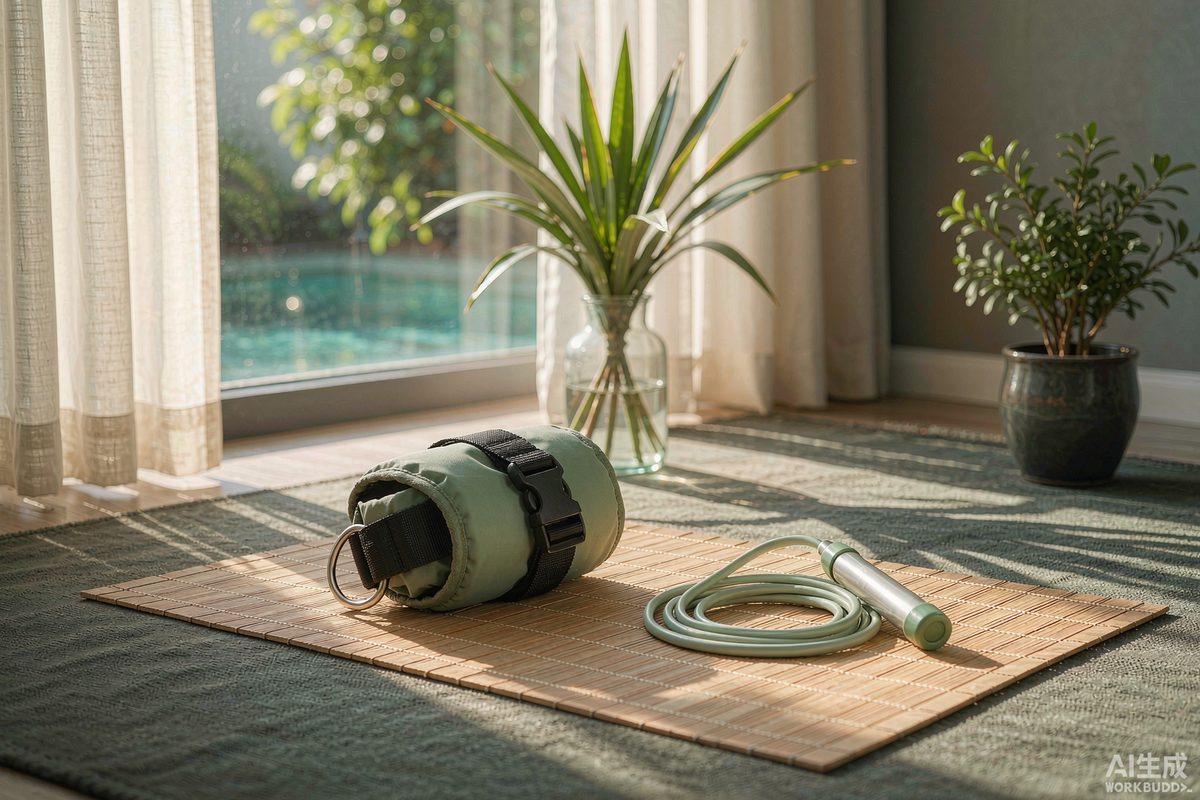
Three questions filtered every candidate. Does it remove a real, named limit — a thing that demonstrably ends sets or blocks progress? Will it survive a home environment, meaning small footprint, no dedicated room, tolerable noise? And is there trial evidence, or at least biomechanics literature, behind the reason someone would buy it? The last point matters because the accessories market runs on folklore.
Whole categories — gloves, wrist wraps for beginners, lifting shoes at entry level — rest on claims no one has measured. We left them out not because they are useless but because we could not honestly say what they buy.
The belt literature is the clearest example of honest ambiguity. A 2026 controlled trial found that a weightlifting belt increased squat performance and lifters' subjectively perceived stability, while objectively measured postural stability did not move — a gap between feeling and measurement worth knowing before purchase.
Older biomechanics cut the other direction on the same object: a 2006 analysis of a stiff belt during lifting measured increased spinal compression in some conditions, directly against the protective folklore. Read together, the literature says the belt is a performance and attention tool with a specific mechanism — something to brace against — and not a back shield. We priced it, and framed the pick, accordingly.
Straps sit on firmer ground. The 2021 Biology of Sport trial measured faster bar velocity, better grip security, and lower perceived exertion in heavy deadlifts with straps versus without, which is exactly the claim a buyer needs tested. Bench evidence is mostly mechanical rather than clinical, so the bench pick leans on construction specifics: capacity, hinge design, pad density.
- We excluded categories whose sales claims outrun their evidence, however popular they are.
- A gap between perceived and measured benefit is not a scandal — it is data about what the tool actually does.
"Folklore sells accessories. Trials, when they exist, usually sell less of them."
The Floor Is a Fine Press Height. A Bench Is Better.
The first purchase is the one that changes the geometry of your training space. Floor pressing — lying flat on the ground and pressing dumbbells up — is a legitimate movement, and it has a built-in safety net that makes it the right starting press for beginners.
But the floor also ends the range of motion at elbow height, which means the chest and shoulders never pass through the deeper portion of the press, and every rowing variation heavier than a bent-over dumbbell row turns into an exercise in lower-back endurance instead. A bench fixes both at once.
Presses travel through their full arc; chest-supported rows appear; hip thrusts, step-downs, and seated shoulder work all get a stable platform they did not have.
The foldable adjustable category earns its spot in a small space for one reason: flat benches do almost as much and cost less, but they never leave the room. A folder that leans against a closet wall between sessions keeps a studio apartment in the strength game.
Within the category, spend your attention on the three specifics from the product notes above — stated weight capacity including bodyweight, a pin-lock rather than a spring latch at the hinge, and a pad dense enough that your shoulder blades do not sink. The incline positions you will actually use are two or three; a bench offering eleven positions is selling you a menu, not a meal.
One honest failure mode: folding benches sacrifice some rigidity, and at heavy dumbbell loads the flex is real on budget models. If your pressing is already strong — past roughly the eighty-pound dumbbell pair — a dedicated flat bench is the sturdier buy, and the closet will survive.
Pairing advice, since most people reading this own adjustable dumbbells rather than a barbell: check the seat height against your pressing range before ordering. A pad that sits too low turns every dumbbell press into a series of micro-swing starts, and one that sits too high pins the shoulder blades at an awkward angle.
The test is simple — sit on the bench, set the dumbbells on your thighs near the knee, and kick them back into position; if the press starts cleanly from a stable shoulder position without a scramble, the geometry is right. Also measure the folded depth against your actual storage gap, not your optimistic one. The category's most common return reason is not quality. It is a closet shelf two inches too shallow.
- A bench adds range of motion to presses and unlocks chest-supported rows — the two biggest upgrades a dumbbell corner can get.
- Check the weight rating includes your bodyweight, and prefer a pin-lock hinge. Wobble at the fold is where cheap benches retire early.
"A bench is not a luxury item. It is the difference between pressing past your elbows and pressing past your limits."
The Belt: A Cue You Wear
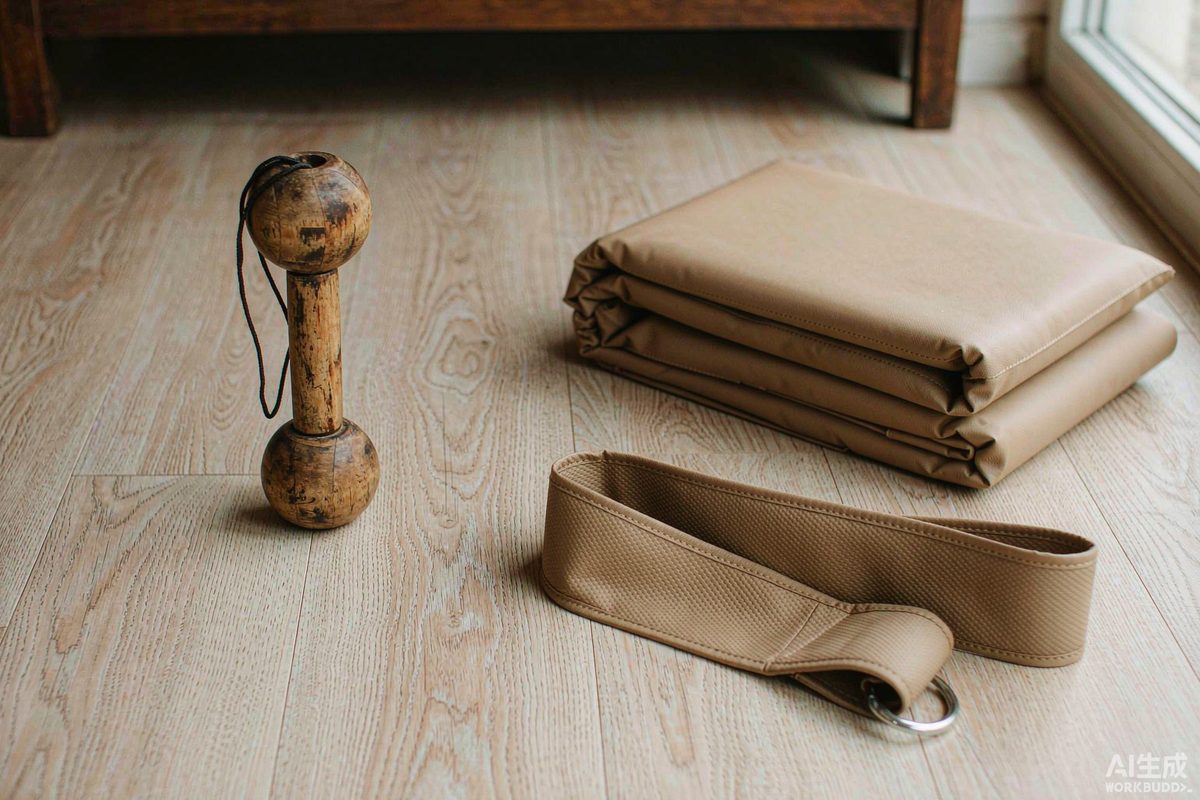
Belts attract more mythology per square inch of leather than any object in the gym, so the pick starts by clearing it. The mechanism is bracing, not protection. A firm band around the trunk gives the abdominal wall a surface to push against, which raises intra-abdominal pressure and, more usefully, makes the brace impossible to skip — you feel the cue on every repetition.
The 2026 trial puts numbers on the honest version: better squat performance, higher perceived stability, and no change in objectively measured stability.
The 2006 biomechanics finding that a stiff belt can coincide with increased spinal compression in some lifting conditions belongs in the same paragraph, not the fine print: the belt is not a back shield, and anyone buying one to make a painful back liftable is solving the wrong problem in an expensive way.
Within the category, the differences that matter are thickness, width, and closure. Ten millimeters is the versatile middle — stiff enough to brace against, forgiving enough to break in without a two-week war. Four-inch back width suits most torsos; taller or longer-waisted lifters sometimes prefer uniform-width designs.
Prong closures beat levers in a home context, because a lever mechanism is sized precisely and a prong tolerates the day-to-day fluctuation in how a waist sits. Leather softens and molds; the scuffs it earns are the point.
Who should skip it: anyone whose heaviest sets are still in the range where bracing fails for lack of practice rather than load. Learn to brace against your own hand first. The belt is a graduation present, not a starter kit — the classical seat of strength, as the Suwen has it, does its best work when the officer already knows the job.
- A belt raises performance and attention to bracing; trials do not support the shield mythology. Buy it for heavy days, wear it for heavy days.
- Size down between options, choose a prong over a lever for flexible fit, and break the leather in gradually over a few weeks.
"The belt is a cue you wear. When the cue becomes the job, take it off."
Straps: For the Days Grip Quits First
The cheapest object in this review changes more training logs than the other two combined. The scenario is universal: the heavy row or deadlift is going well, the back and hips have more in them, and the fingers open.
Grip strength develops on its own schedule, which is slower than back strength in almost everyone, and without straps the session either ends early or migrates to lighter weights — both quiet failures that compound over months into the classic pattern of an upper back that never got its work. A pair of cotton webbing loops closes that gap for the cost of lunch.
The evidence is refreshingly direct for such a small object. The 2021 trial in Biology of Sport measured the heavy deadlift with and without straps and found faster movement velocity, better grip security, and lower perceived exertion when straps were used — meaning the set became a back and hip exercise again, which is what the lifter chose it to be.
The same logic dictates the discipline: strap the top sets, leave the warm-ups and lighter work bare-handed. Grip that never trains stays weak, and the forearms are not a body part worth outsourcing permanently. Straps are a lease, not a transfer of ownership.
Construction differences are small but real. Webbing about an inch and a half wide distributes pressure without cutting into the wrist; a padded section at the crossing point earns its few extra dollars within the first heavy session; and cotton, for all its fraying, grips a bar better than slick nylon.
The figure-eight styles that some lifters favor are stronger still but slower to set up — for a home lifter running ten sets a week, a simple loop strap is the right complexity budget.
For balance, it is worth naming what straps do not fix and what stands beside them. Mixed grip — one hand over, one under — is a free technique change that buys a few more bare-handed repetitions and belongs in every puller's toolkit before straps enter the picture. Chalk, which costs less than the straps, solves the moisture half of the grip problem and improves the bare-hand sets that keep the forearms training.
Neither replaces a strap when the target set is a five-repetition deadlift at bodyweight-plus; both mean the strap day arrives later and does more work when it does. And hook grip — thumb trapped under the fingers — is the Olympic lifter's answer, effective and painful enough that most recreational pullers decline the tuition.
- Strap the heaviest pulling sets only. Bare-hand warm-ups keep the forearms in the program.
- One loop on the wrist, two passes under-and-over the bar, and let the webbing hold the weight — gripping harder defeats the purpose.
"Grip is a gatekeeper that forgets it is supposed to be a door. Straps remind it."
Which One First, and Who Should Skip What
If the budget allows one purchase, the math is not close: the bench, every time. It expands the exercise menu of an existing dumbbell set more than the other two objects combined, it serves every training level from week one, and it has no learning curve.
Straps come second on value per dollar — eight to twenty dollars for measurable deadlift and row improvements is the best ratio in the industry — but only matter once pulls are genuinely heavy, so a brand-new lifter can wait a month or two without losing anything. The belt is last, deliberately: it multiplies a skill that has to exist first, and buying it early mostly purchases a false sense of readiness.
The skip lists deserve equal billing. Skip the bench if you train lower body exclusively or have gym access for pressing days — it is furniture otherwise. Skip the belt if your working weights are still moderate, if you have unmanaged blood pressure concerns you have not discussed with a clinician, or if any purchase would be motivated by an existing back complaint; that complaint wants an assessment, not leather.
Skip the straps if wrist or thumb pain, rather than grip fatigue, is what ends your sets — a strap will happily conceal a problem that technique changes or a professional opinion would fix.
One more note on ordering, from experience rather than literature. The bench arrived on a Tuesday and was being used before dinner the same day. The belt took two weeks of breaking in and a few awkward sessions before it felt like part of the lift. The straps worked in ninety seconds on day one. Plan expectations accordingly: the cheap object is instant, the expensive one is a courtship.
- Budget order: bench, straps, belt. Learning-curve order is the reverse.
- Pain is a skip signal, not a shopping trigger. Belts and straps are performance tools, not symptom managers.
"One purchase changes the menu, one changes the pull, one changes the ceiling. In that order."
Care, and a Closing Word
None of this equipment asks for much, but each object has one habit worth forming. The bench wants its hinge bolts checked monthly with the included hex key — vibration loosens them slowly, and the first symptom is a click you will hear right at the worst moment of a heavy set. Wipe the pad after sweaty sessions; foam that stays damp delaminates within a couple of years, foam that stays dry lasts a decade.
The belt wants leather conditioner a few times a year and storage unrolled or hung, never creased in a gym bag where the fold becomes permanent. The straps want a wash every month or so in a garment bag, air-dried — cotton that stays saturated with sweat hardens into something closer to rope, and hardened webbing chews through a bar's knurling faster than anyone expects.
The longer view is the one the classics keep drawing. The Suwen gives the lower back to the Kidney and calls the same organ the officer of strength — the seat and the force as one administration. The Zhen Jiu Da Cheng keeps a point below the lumbar spine it names the Gate of Life, warmed and tended when the seat had gone weak.
Read as advice rather than anatomy, the tradition says: the strong years are kept by tending the base of the body's power, patiently, over a long time. A folding bench in a closet is a modest version of that tending. The corner is small, the objects are cheap, and the officer of strength does not care about the view — only that the work keeps arriving.
For the accountants among us, the whole corner prices out between one hundred and two hundred and seventy dollars depending on choices — less than three months of a commercial gym membership in most cities, and it does not renew.
That comparison is slightly unfair to gyms, which offer coaches, racks, and strangers to spot a heavy press, and worth making anyway, because the reason most home corners stall is not equipment quality. It is the belief that the setup is temporary and the real training happens elsewhere. Three well-chosen objects, used for a year, quietly retire that belief.
Where the Suwen places the seat of strength, the modern version places a closet door that no longer quite closes — which is, we submit, the correct direction for the argument to move.
- Monthly bolt check on the bench, occasional conditioning for the belt, monthly wash for the straps. Ten minutes of care, years of service.
- Store everything dry and uncreased. Most home equipment dies of damp and folding, not of lifting.
"The heavy corner is tended, not assembled. Small habits, cheap objects, long arithmetic."