Mindfulness Gets You to the Door. Shen Cultivation Opens It.
Mindfulness has taken over. Hospitals teach it. Schools, boardrooms, the military — everyone's got a module. Over 200 million people now keep a meditation app on their phone, and the NHS, the WHO, and the American Heart Association all recommend some version of it for stress. Fine. Good, even.
The evidence is real: mindfulness lowers anxiety, steadies attention, eases pain, and changes the brain in measurable ways — the amygdala shrinks, the prefrontal cortex thickens.
But here's what mindfulness was never designed to do, and what Chinese medicine has been doing with meditation for roughly two thousand years. Mindfulness changes your relationship to your thoughts. Shen cultivation changes the consciousness those thoughts arise from. Put crudely: mindfulness teaches you to tolerate a noisy neighbor; Shen cultivation reveals that the neighbor was you all along.
That's a bigger claim than it sounds, so let me be precise. Mindfulness operates at the level of attention and metacognition — observe, label, release, repeat. Shen cultivation operates at the level of identity. The 'you' who gets anxious, the 'you' who gets depressed, the 'you' who's hoping to get enlightened — all provisional. They arise from the same luminous awareness and dissolve back into it.
In TCM, that awareness is called Shen (神). It's the light in someone's eyes, the quality of presence that makes a person feel fully 'there' when you're talking to them.
And Shen can be trained, on purpose, through a three-stage method the Chinese medical and Daoist lineages have handed down for centuries: calming (An Shen), concentrating (Ding Shen), and dissolving (Wu Shen). This article covers all three, sketches the TCM anatomy of consciousness that makes them work, and ends with a 10-minute daily routine.
Whether you've meditated for twenty years or never sat once, there's a starting point here.
- Shen cultivation is not a replacement for mindfulness — it's the depth dimension beneath it. If mindfulness is learning to swim, Shen cultivation is learning to be the ocean.
- Don't worry if the concepts seem abstract at first. Shen cultivation is experiential, not intellectual. The words are pointers, not the thing itself. Your direct experience in meditation is the only authority.
- Start where you are. If you've never meditated, begin with Stage 1 (Calming) and spend weeks or months there before moving to Stage 2. The stages build on each other — there are no shortcuts.
"In ancient times, the sages cultivated tranquility and emptiness. The true Qi followed. The essence and spirit were guarded within. Where could illness come from?"
Shen: The Word That Refuses to Translate
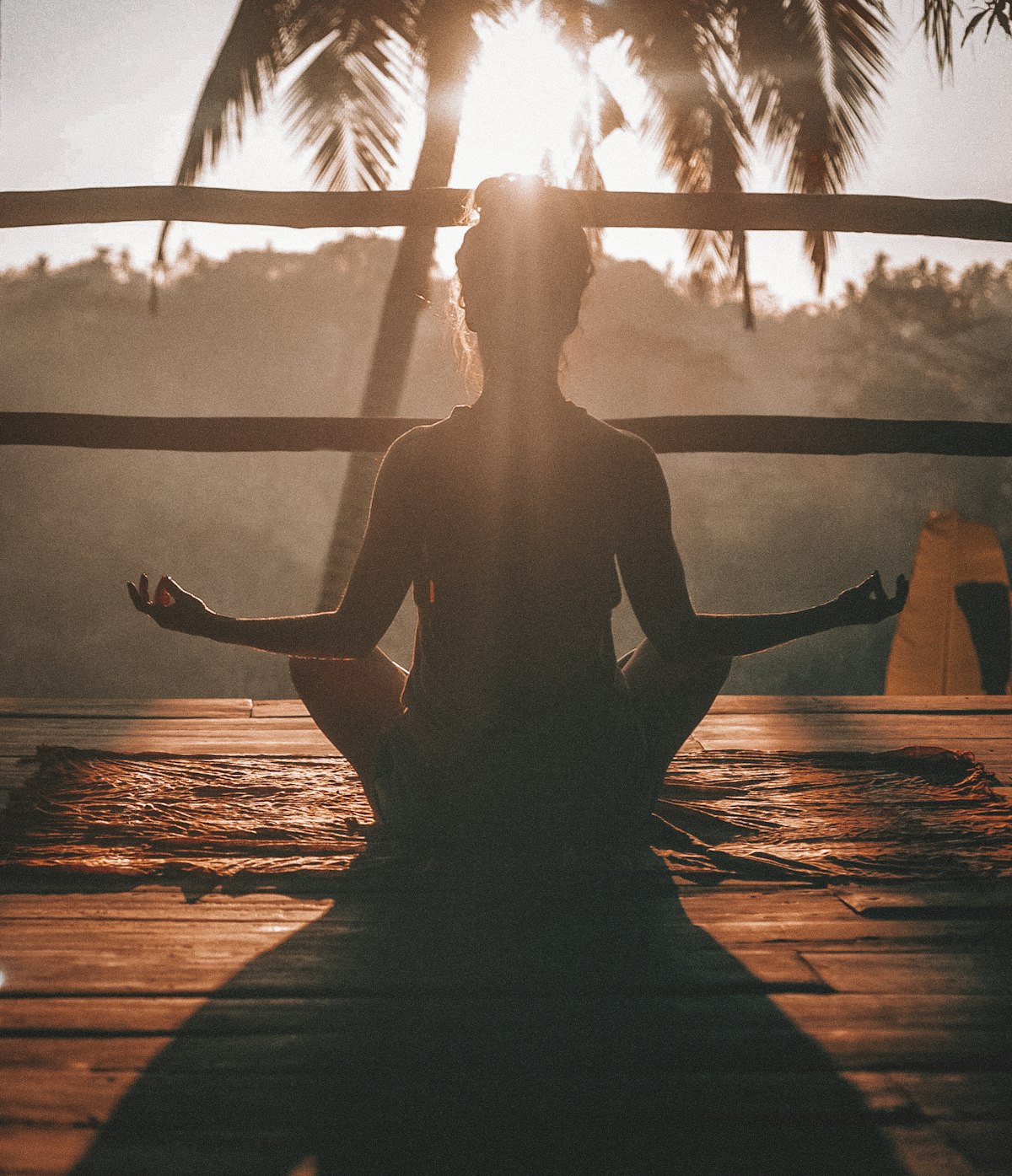
Shen (神) doesn't translate. Spirit, mind, consciousness, awareness, soul — every English word grabs a piece and drops the rest. The character itself shows a hand making an offering beside an altar, which tells you where this concept lives: halfway between what's human and what's beyond it.
Here's the thing about TCM's model of consciousness: it isn't located in one organ. It's spread across five spiritual aspects, each housed in a different organ system, each contributing its own flavor to experience. Shen is the aspect that belongs to the Heart. It's what makes a person feel present, coherent, alive. When someone lights up a room, that's Shen doing its job.
When someone's eyes go flat and distant — the stare you see in trauma or severe depression — that's Shen disturbance.
The Yellow Emperor's Inner Canon is blunt about it: the Heart houses the Shen. Not the brain. The Heart. Western medicine shrugged at that for a couple of centuries, and then neurocardiology came along and found the heart has its own nervous system, its own say in emotional processing, and an electromagnetic field roughly sixty times stronger than the brain's. 'Quaint' aged into 'prescient.'
TCM also gives Shen a physical address: Heart Blood. Blood is the dwelling of the Shen — the material home that houses consciousness. Abundant Blood, peaceful Shen. Deficient Blood, restless Shen. That's why the classic 2 AM pattern — heart pounding, mind racing, sleep nowhere in sight — gets treated with blood-nourishing, Shen-calming herbs rather than sedatives.
But Shen has a transcendent side too. Beyond the psychological self, it's the spiritual self — a drop of universal consciousness wearing an individual identity for a while. Daoist meditation doesn't stop at calming the Shen; the aim is to cultivate it until it merges back with the Dao, the undifferentiated source. That's Stage 3, and I'll get there.
For now, just note that this esoteric-sounding idea has practical consequences for mental health that Western psychology is only starting to take seriously.
- You can feel your Shen right now. Place your hand on your chest. Notice the quality of your presence — is it scattered or gathered? Clear or foggy? Calm or agitated? This direct felt sense is your Shen, and it can be observed and cultivated.
- The Shen's house is Blood, and Blood is built from food and sleep. If you want to cultivate your Shen, the most basic practice is eating nourishing food and sleeping before 11 PM — the spiritual and the biological are the same system.
- The light in someone's eyes — the quality that makes you feel seen and recognized when you talk to them — is Shen. When that light dims, it's a sign of Shen disturbance, and it responds to exactly the practices described in this article.
"The Heart is the sovereign ruler of the body. The spirit and brightness of consciousness issue from it. When the Heart is in harmony, all twelve organs function in peace."
Five Spirits, Five Organs: The TCM Map of Where Consciousness Lives
Western neuroscience treats consciousness as something the brain does — networks firing, the default mode humming, the prefrontal cortex integrating inputs. The self is a process, not a thing. TCM treats consciousness as distributed: five spirits, five organ systems, each contributing a different quality to the whole. Neither model is wrong. They're looking at different floors of the same building.
Here's the full map, top to bottom. Shen (神) lives in the Heart. It's the sovereign — the integrating center, the quality of coherent presence. The Heart's element is Fire: it rises, warms, illuminates. Shen healthy, you feel like yourself; Shen disturbed, you feel fragmented, anxious, half-dissociated. Hun (魂) lives in the Liver — the ethereal soul that travels in dreams, the source of vision and life direction.
Healthy Hun brings purpose and creative flow; disturbed Hun brings aimlessness and nightmares. The Liver's element is Wood: growth, expansion, reaching upward.
Po (魄) lives in the Lung — the corporeal soul, the part of consciousness tied to body, sensation, instinct. Healthy Po keeps you grounded, senses clear; disturbed Po leaves you numb and disembodied. The Lung's element is Metal: it contracts, discerns, sets boundaries. Yi (意) lives in the Spleen — the thinking mind, analysis, planning.
Healthy Yi thinks clearly; disturbed Yi runs the same loop over and over, obsessive and ruminative. The Spleen's element is Earth: centering, stabilizing. Zhi (志) lives in the Kidney — the will, the drive, the follow-through. Healthy Zhi finishes what it starts; disturbed Zhi can't get going. The Kidney's element is Water: storage, consolidation, the deep foundation.
Shen meditation touches all five, but the Heart Shen is the sovereign. Calm it, concentrate it, eventually dissolve it — and the other four fall into line on their own. That's not poetry, it's a mechanism.
Cardiac coherence training, a Western technique that essentially does what calming the Heart Shen does, improves not just emotional regulation but immune response, cognition, and stress resilience across the board. The sovereign rules the kingdom.
- Notice which of the five spirits feels most disturbed in your experience. Is it Shen (anxiety, fragmentation)? Hun (loss of direction, nightmares)? Po (disembodiment, numbness)? Yi (overthinking, rumination)? Zhi (lack of motivation, despair)? The answer points to which organ system needs the most support.
- The five spirits are not metaphors. They describe real qualitative dimensions of consciousness that anyone can observe in themselves with minimal introspection. Try tracking each dimension daily for a week on a 0-10 scale.
- Shen cultivation primarily works through the Heart but harmonizes all five spirits. This is why long-term meditators tend to report improvements not just in calmness but in creativity (Hun), embodiment (Po), mental clarity (Yi), and motivation (Zhi).
"The Heart stores the Shen, the Liver stores the Hun, the Lung stores the Po, the Spleen stores the Yi, and the Kidney stores the Zhi. These five spirits are the officials of the body, and when they are in harmony, the person is whole."
Stage 1: Calming the Shen (An Shen, 安神) — Let the Sediment Settle
Stage 1 is the foundation, and it's where most people — including experienced meditators — need to spend more time than they think. Calming the Shen isn't about forcing the mind quiet. It's about setting up breath, posture, and environment so the Shen settles by itself, the way sediment settles in still water.
The posture matters more than you'd guess. Sit on a cushion or folded blanket that tilts your pelvis slightly forward so your spine stacks naturally. Knees below hips — if they don't reach the floor, prop them with pillows. Hands rest on your thighs or in your lap, left cradling right, thumbs barely touching. Lengthen through the crown of your head as if a thread is pulling upward. Tuck the chin a little.
Unclench the jaw. Soften your gaze or close your eyes.
Then the breath: natural, through the nose. No forcing, no manipulating — the intervention at this stage is attention, not control. Feel the air at your nostrils, or the rise and fall of your belly. Your mind will wander, hundreds of times, and the entire practice is just this: notice it wandered, bring it back, no judgment, no frustration. Return, return, return.
Start with ten minutes and build toward twenty, then thirty. The first five to ten minutes are mostly your nervous system shifting gears from sympathetic to parasympathetic — which is why early meditation often feels like nothing's happening. The real settling begins around the fifteen-minute mark: heart rate down, breath deeper, the Shen anchored in the body instead of chasing thoughts across the mental sky.
What's actually going on, in TCM terms: sitting still and breathing deeply calms the Heart Shen, nourishes Kidney Yin by easing sympathetic output, and settles rebellious Liver Qi as the diaphragm relaxes and the shoulders drop. The tongue, which mirrors the Heart, relaxes in the mouth.
The mechanism underneath isn't mystical — slow breathing activates the vagus nerve, which releases acetylcholine, which tells every organ system it's safe to rest. The Shen, agitated by fight-or-flight tone, settles when parasympathetic tone returns.
That's the whole of Stage 1 — simple, repeatable, and the ground everything else stands on. Give it two to four weeks of daily practice before moving on. Trying to concentrate a Shen that isn't calm is like focusing a flashlight with a flickering bulb: you'll get nothing but frustration.
- Don't evaluate your meditation by how quiet your mind is. Evaluate it by how quickly you notice when your mind has wandered and how gently you return it to the breath. Speed of noticing and gentleness of returning — those are the metrics.
- The first 10 minutes of meditation often feel worse than no meditation at all — because you're suddenly aware of how busy your mind is. This is not regression; it's the awareness that was always there but was being drowned out by distraction. Stay seated.
- If sitting still is agonizing, start with 5 minutes of gentle qi gong (Eight Brocades or simple joint rotations) before sitting. Moving meditation circulates Qi and makes stillness accessible.
"The sage governs the body by calming the Shen. When the Shen is calm, the Qi flows smoothly. When the Qi flows smoothly, the blood circulates without obstruction. When the blood circulates freely, the hundred diseases cannot arise."
Stage 2: Concentrating the Shen (Ding Shen, 定神) — Scattered Light, Gathered Into a Beam
Once the Shen can rest on the breath without constant disruption, you're ready for Stage 2: concentrating it. Ding Shen means stabilizing the spirit on a single object so the scattered light of consciousness gathers into a beam. Western traditions call this focused attention, and it's close — but the TCM framing adds something. You're not just training attention.
You're bringing the spirit home from its habitual wandering and giving it one stable place to live.
Three traditional objects have been used for centuries. Pick the one that speaks to you. First, the candle flame (Huo Guan, 火观). Set a candle at eye level, three or four feet away. Gaze softly — don't stare; look at it the way you'd look at a distant mountain.
Keep maybe thirty percent of awareness on the flame and the rest on the inner sensation of it: the warmth, the brightness, the afterimage behind your closed lids. The flame's Fire resonates with the Heart's Fire, which makes this a good pick when Shen disturbance comes with cold and deficiency.
Second, sound (Sheng Guan, 声观). A singing bowl, a bell, a mantra, even your own relaxed humming. Follow the sound completely — its start, its sustain, its decay into silence — and when it fades, rest in the silence until the next strike. Sound reaches the Shen through the Kidney-Heart axis: the ears are the Kidney's orifices, and sound travels the Water pathway up to cool the Heart's Fire.
Choose this one for racing minds and insomnia.
Third, the Lower Dan Tian (丹田) — the 'cinnabar field,' about three finger-widths below the navel, deep in the center of the body. It's the seat of Kidney Qi and the storehouse of postnatal Jing. Put your attention there like a warm golden ball of light, and with each inhale, breathe into it — not by forcing air into the belly, just by resting attention there.
Dan Tian work pulls consciousness down out of its habitual perch in the head and restores the Heart-Kidney communication that TCM considers the foundation of mental health.
Practice ten to twenty minutes, ideally after five to ten minutes of Stage 1 to prepare the ground. The transition should feel organic — the Shen settles, and when it's calm enough, you let it come to rest on the object. The concentrated Shen feels different from the calm Shen. There's a steady, warm luminosity to it, not the jagged brightness of overstimulation.
Thoughts still arise, but they're thinner, more transparent — they pass through without catching. The object becomes your center of gravity. Next to it, the scattered attention you lived with before starts to feel, honestly, like a mild form of madness.
- Don't move to Stage 2 until Stage 1 feels stable — at least 2-4 weeks of daily practice. Rushing the stages is the most common mistake and leads to frustration. The Shen is like a wild horse: you calm it before you train it.
- If you choose candle meditation, use a beeswax or soy candle — paraffin releases volatile organic compounds that are the opposite of Shen-calming. The quality of what you inhale matters.
- If concentration feels effortful, you're trying too hard. Ding Shen is like focusing a camera — you adjust the lens until the image clarifies, not until your knuckles turn white gripping the camera.
- The Dan Tian meditation is ideal for people with anxiety and insomnia — it pulls Shen downward, counteracting the upward-agitation pattern of Heart Fire and Liver Yang rising. You may feel warmth in your lower abdomen, and that's a good sign.
"When the mind is fixed on one point, the Shen is gathered. When the Shen is gathered, the Qi follows. When the Qi follows, the essence is preserved. When the essence is preserved, the body is light and the spirit is clear."
Stage 3: Dissolving the Shen (Wu Shen, 悟神) — When the Watcher Drops Away

This is where TCM meditation parts ways with mainstream mindfulness most dramatically — and where it starts to sound mystical. So let me say it plainly: Wu Shen describes a reproducible shift in consciousness that contemplative traditions everywhere have documented independently. It's not a belief. It's an experience you can have, and the conditions for it are trainable.
Wu Shen means 'awakening to Shen' — realizing it. At this stage, the meditator stops experiencing themselves as a separate self observing an object of meditation. The watcher dissolves. The boundary between subject and object collapses. There's no 'me' meditating — there's just meditation happening, luminous and unbounded.
It can arrive in a flash — a sudden aperture in ordinary consciousness — or it can build slowly, the sense of separation thinning over weeks until one day you realize the 'you' that was meditating was just another thought, and what remains is awareness without a center. Both routes are real.
Here's the practical instruction, such as it is. After you've established calm, concentrated awareness on your object — breath, flame, Dan Tian — gently let go of the object. Don't push it away, don't abandon it, just stop holding it. Rest in the awareness that was focused on the object. Let thoughts arise and dissolve like waves on the ocean while you rest as the depth.
There's no technique here beyond relaxing — relaxing the grip of attention, relaxing the sense of being a 'someone' who's doing the meditation, relaxing into the plain fact of being aware.
When it happens, it's unmistakable. Not blankness, not sleep — it's hyper-alert, more awake than ordinary waking consciousness, but without a subject located behind the eyes directing attention at objects 'out there.' Boundaries soften. Time goes porous. The inside/outside, self/world, meditator/meditation distinctions relax into one field.
In TCM terms, the Shen is returning to its source. The drop of individual consciousness merges with the ocean — the Dao, the undifferentiated ground of everything. The Heart Shen, ordinarily localized in one body-mind, recognizes itself as a temporary expression of universal awareness. That's not annihilation, and it's not depersonalization. It's integration at the highest level.
And it has practical effects: when you've seen — even once, even briefly — that the self you defend and worry about is a construction, anxiety loses its grip. Not because you solved its content, but because the 'you' who was anxious turned out to be provisional.
Depression gets reframed the same way — not as a defect in you, but as a pattern of Qi, Blood, and Shen passing through a field of awareness that belongs to no one. That's not escapism. It's the most engaged possible confrontation with what you are.
- Don't chase the Wu Shen experience. The desire to 'dissolve the self' is itself a self-centered desire and will prevent dissolving. Stage 3 arrives when the first two stages have done their work and the Shen is ready — its arrival is grace, not achievement.
- Brief glimpses of Wu Shen are more common than sustained abiding. A moment of boundarylessness during meditation, a sudden sense of unity walking in nature, a dissipation of self during music or art — these are apertures. They're real, they count, and they accumulate.
- If Wu Shen feels destabilizing — if the loss of self-boundary is frightening rather than liberating — pause Stage 3 work and return to Stage 1. The Shen needs to be sufficiently anchored before it can safely dissolve its moorings. This is not a failure; it's wisdom.
- Grounding after Stage 3 practice is essential. Eat something warm. Press K-1 (Kidney-1, the Bubbling Spring on the sole of the foot). Walk barefoot on grass. Re-inhabit the body deliberately. The post-dissolution return is as important as the dissolution itself.
"The Dao that can be spoken is not the eternal Dao. The name that can be named is not the eternal name. Without desire, observe the mystery. With desire, observe the manifestations. These two emerge together but differ in name. Their unity is called the dark — dark upon dark, the gateway to all mystery."
What's Actually Happening: The Heart-Kidney Axis and the Scans That Back It Up
Let's ground this in something a clinician can use. What is actually happening — physiologically, neurologically, emotionally — when someone practices this method consistently? Start with the TCM model: Shen meditation heals by restoring the Heart-Kidney axis, the conversation between Fire (Heart) and Water (Kidney) that underlies mental-emotional stability.
In the unmeditative state, modern life pushes that axis toward breakdown. Chronic stress keeps the sympathetic nervous system switched on. Kidney Yang exhausts from overstimulation; Kidney Yin thins out and stops cooling the Heart. The Heart Fire flares unopposed — Shen gets agitated, scattered, unanchored. You feel anxious, wired, unable to settle.
Let it run long enough and the Fire burns through the Yin entirely, leaving you in the worst of both worlds: exhausted and unable to rest.
The three stages reverse this in order. Stage 1 — calming — activates the parasympathetic system through slow breathing and stillness. Heart rate drops, cortisol drops, the Kidneys get relief from constant bombardment and start rebuilding Yin. The Heart Fire settles. Stage 2 — concentrating — strengthens the axis by anchoring the Shen in a single point, usually the Lower Dan Tian, the energetic seat of Kidney Qi.
Attention drops below the navel, out of the head, into the Kidney's domain. In classical terms, Heart Fire descends to warm Kidney Water — the fundamental healing movement of the axis. Stage 3 — dissolving — completes the integration: the localized Shen recognizes itself as continuous with the larger field. Fire and Water, awareness and substance, seen as two aspects of one reality.
The Western neuroscience lines up better than I expected when I first looked. A 2017 meta-analysis of fMRI studies found long-term meditation consistently deactivates the default mode network — the self-referential loop that generates worry, rumination, planning, self-criticism. That's the neural correlate of An Shen: quieting the DMN is quieting the agitated Shen.
A 2015 neuroplasticity study found long-term meditators show more gray matter in the prefrontal cortex, hippocampus, and insula, and less in the amygdala. That's the structural correlate of Ding Shen — concentration literally reshapes the brain.
The most striking finding, the one that maps closest to Wu Shen, comes from research on non-dual awareness meditators: their resting EEG shows high-amplitude gamma synchrony across the whole brain. The dissolved-self state isn't a dimmer state of consciousness. It's a hyper-integrated one. The brain isn't doing less — it's doing more, all at once.
TCM has been pointing at this for two millennia; the scanners are just catching up.
- Track your HRV (heart rate variability) if you have a wearable device. It's the single best biomarker for Heart-Kidney axis health. Improvements in HRV during meditation correlate with both TCM patterns of Shen-calming and Western measures of emotional regulation.
- The most reliable early sign that Shen cultivation is working: your startle response decreases. You still hear the loud noise, but it doesn't travel through your body the way it used to. The Shen is more anchored — external stimuli still register but don't displace your center.
- If you're working with a therapist or psychiatrist, tell them you're meditating — and specifically what kind of meditation. The effects of Shen cultivation on the DMN, amygdala, and prefrontal cortex can interact with psychotropic medications, and dosages may need adjustment over time.
"When the Heart and Kidneys communicate, Water and Fire are in harmony. The Shen is anchored, the Jing is preserved, and the hundred diseases find no opening."
The 10-Minute Daily Sit: Same Structure, Deeper Every Time
Theory is fine, but practice is what changes you. Here's a complete ten-minute daily sit built around the three stages. The structure stays the same whether you're on Day 1 or Year 10 — only the depth grows.
Minutes 0-1: get settled. Sit, adjust your cushion, light the sandalwood if you use it. Soften your gaze or close your eyes. Take three slow breaths — in through the nose, sigh out through the mouth — and on each exhale, let something go: shoulders drop, jaw unclenches, forehead smooths. Set the intention silently: 'for these ten minutes, I cultivate my Shen.'
Minutes 1-4: Stage 1, calming. Attention to the breath, natural breathing, no manipulation. Feel the air at your nostrils or the rise and fall of your belly. Mind wanders, notice, return. That's the whole practice, and it takes the largest share of the timer because it's the foundation. At minute four, shift attention to the space between breaths — the still point at the end of each exhale.
Rest there a few cycles, then drop attention to the Lower Dan Tian, three finger-widths below the navel, like a soft warm weight.
Minutes 5-8: Stage 2, concentrating. Rest in the Dan Tian. With each inhale, feel — or imagine — warmth gathering there, golden and alive. With each exhale, let it radiate outward like ripples. Thoughts pass through the periphery; your center stays put. Minutes 8-9: Stage 3, dissolving. Let go of the Dan Tian. Let go of the breath. Let go of meditating.
Rest as awareness itself — not awareness of anything, just awareness. If that feels abstract, rest in the space between two thoughts, the silent alert emptiness before the next one arrives. A thought comes, don't resist; let it fall like a wave.
Minute 9-10: come back. Feel the weight of your body on the cushion. Wiggle fingers and toes. One deep breath, a stretch if your body asks for it. Open your eyes slowly. Sit a moment before standing, and notice the quality of what's there — the Shen you've been tending, quieter beneath the thoughts but present. Luminous.
That's the whole routine. Simple on purpose. What changes over the months isn't the structure — it's the depth. The stillness deepens, the concentration steadies, the glimpses of Wu Shen get longer and start to leak into the rest of your day. The practice doesn't change. You do.
- Morning is the ideal time for Shen meditation — 5-7 AM, during the Large Intestine hour, when Yang is rising but the mind hasn't yet been colonized by the day's demands. If morning isn't possible, any consistent time is better than no consistent time.
- Ten minutes every day is infinitely more powerful than one hour once a week. Shen cultivation is cumulative — each session builds on the last, like watering a plant. A weekly deluge followed by six days of drought won't grow anything.
- Keep a simple meditation journal. After each session, jot down one sentence: the quality of your Shen during meditation (calm, scattered, focused, luminous, etc.). Over weeks and months, you'll see a trajectory that's invisible day to day.
- If you miss a day — or a week — don't waste energy on guilt. Shen cultivation is not a test. Just sit down and begin again. The Shen doesn't judge; it just waits.
"The sage embraces the One and becomes the model for the world. He does not look at himself, therefore he is bright. He does not assert himself, therefore he is manifest. He does not boast, therefore he has merit. He does not contend, therefore no one can contend with him."