The Twenty-Minute Delay
Your stomach knows you've eaten long before your brain does. That gap — between food hitting the stomach and the 'I'm full' message reaching the part of you that decides whether to keep eating — is roughly twenty minutes. Eat a meal in seven minutes and you've outrun the signal by thirteen.
You stop not because you're full but because the plate is empty, and the second helping you reach for is a decision your body never got to weigh in on.
TCM has been saying some version of this for two thousand years. The Stomach receives. The Spleen transforms. These are two separate jobs, and they run on different clocks. The Stomach can accept food quickly — it's a holding vessel, a sea of grain and water, as the classics put it. The Spleen works slower.
It has to break food down, sort the clear from the turbid, and lift the useful part up to nourish the whole body. Dump food in faster than the Spleen can process it, and the backlog turns into dampness — the soft, heavy, sluggish stuff that shows up as bloating, fatigue, and weight that won't move.
So the question was never really 'what should I eat?' Not first. The first question is 'how fast am I eating it, and is my Spleen keeping up?' Most people who come to me for weight that won't budge already know what a vegetable is. What they've never been asked to notice is the pace of their own fork.
- Time your next meal with your phone. If it takes under ten minutes, you're outrunning the fullness signal — and your Spleen.
- The fullness signal lags eating by about twenty minutes. Anything that slows the meal buys time for the message to arrive.
- Notice where you eat: standing, in a car, at a screen. Speed lives in those settings, not in the food.
"The Stomach is the sea of grain and water. The Spleen transforms and transports. When food arrives faster than the Spleen can work, the clear and turbid are not separated, and dampness is born."
Chewing Is the First Digestion
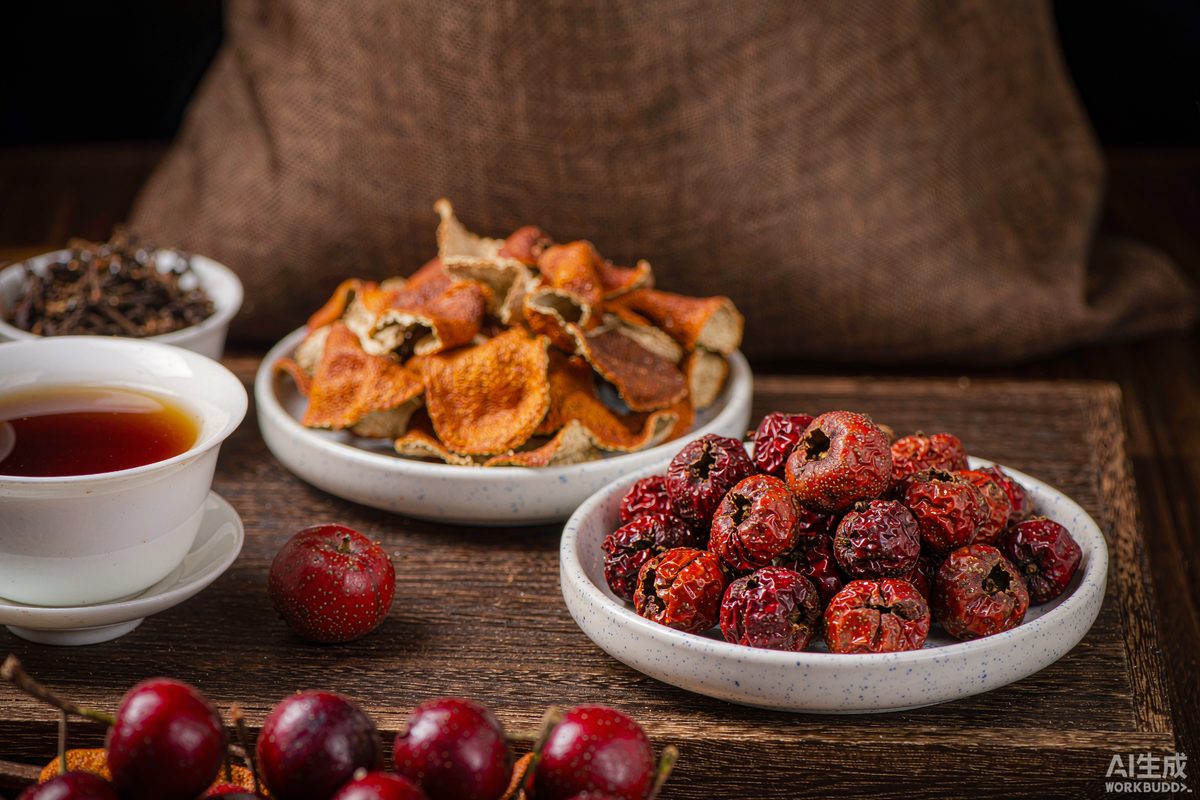
Most people think digestion starts in the stomach. It doesn't. It starts in the mouth, and TCM treats the mouth as the Spleen's own opening — the gate where the whole transformation process begins.
Chewing does three things at once. It grinds food into pieces the Stomach can actually handle, which spares the Stomach and Spleen a heavy processing load. It mixes food with saliva, which already contains enzymes that begin breaking down starch before the food ever reaches your gut. And it takes time — the single most useful thing about chewing for anyone trying to eat less.
A bite chewed thirty times takes thirty times longer to swallow than a bite chewed twice, and every one of those extra seconds is a second the fullness signal gets to travel.
The classical instruction from Sun Simiao, the great Tang dynasty physician, is almost absurdly simple: chew until the food is soft, eat only until seven-tenths full, and put the chopsticks down between bites. Nothing about counting calories. Nothing about forbidden foods. Just a request that you not treat your mouth as a funnel.
I'll be honest about the modern evidence here: the chewing-and-weight research is smaller and messier than the eating-speed research. There's a 2014 study showing that more chews per bite slightly raised diet-induced thermogenesis — the energy your body burns just digesting — but the effect was modest. What's solid is the speed connection, and chewing is simply the most reliable way to slow the fork down.
You don't need to count to thirty. You need to stop inhaling your food.
- Chew until the food is liquid before you swallow. If you can still feel chunks, the Spleen is doing your teeth's job.
- Put the utensil down between bites. The hand is the fastest thing in the meal; give it a task that isn't loading the next bite.
- Don't count chews. It turns eating into a chore. Just notice the texture dissolving — when the bite is gone in the mouth, swallow.
"Eat only when hungry, chew thoroughly, and stop before you are full. Then the Spleen is never overworked, and the hundred diseases find no door to enter."
What the Studies Actually Show
The clearest evidence on this comes from a 2015 meta-analysis in the International Journal of Obesity that pooled twenty-three studies and found faster eaters were consistently more likely to be overweight or obese than slow eaters — roughly double the odds, depending on the study. That's an association, not a smoking gun.
People who eat fast also tend to do other things that pack on weight, and the researchers tried to untangle those. The speed signal held.
A 2010 trial in the Journal of Clinical Endocrinology & Metabolism went after the mechanism directly. Healthy men were given the same 300 ml of ice cream and told to eat it either over five minutes or over thirty.
The slow eaters released measurably more PYY and GLP-1 — the gut hormones that tell your brain you're full — and reported feeling fuller and more satisfied afterward, even though the calories were identical. Same food, same amount. Different speed, different hormonal response. That's the twenty-minute delay showing up in a lab.
And the long view: the 2011 New England Journal of Medicine study that followed more than 120,000 people for up to twenty years found that specific foods and habits — fried food, sugary drinks, processed meat — predicted steady weight gain over time. Eating speed wasn't the headline finding there, but it rides underneath all of it.
The foods that drive weight gain are precisely the ones engineered to be eaten fast: soft, hyper-palatable, already-broken-down. Slow food, the kind that requires real chewing, is its own quiet defense.
The honest caveat: none of this means eating slowly will make you thin on its own. It means speed is one lever among many, and it's a lever almost nobody pulls, because almost nobody has ever been told to notice it.
- Faster eaters had roughly double the odds of overweight in the 2015 meta-analysis — an association, not a guarantee, but a strong one.
- Same ice cream, eaten over thirty minutes instead of five, produced a stronger fullness-hormone response in the 2010 trial.
- Use speed as an add-on, not a replacement. It works with a decent diet, not instead of one.
"The fullness signal is a letter that takes twenty minutes to arrive. Slow eating is the only way to make sure you're home when it does."
The Hormone Brake: Ghrelin, PYY, and the Missing Twenty Minutes
Two hormones run the show. Ghrelin makes you hungry; PYY and GLP-1 make you stop. Ghrelin rises before a meal, peaks, and then falls as food arrives — but it doesn't fall instantly, and it doesn't fall just because the plate is clean. The stop signal is a separate system, and it needs time.
Here's the part that matters for weight. Ghrelin, beyond making you hungry, also nudges the body toward storing energy and can rise as a kind of rebound when weight is lost too quickly. That's the biology that makes crash diets so reliably backfire — the hunger hormone fights back.
The 2002 New England Journal of Medicine study that first mapped this found ghrelin levels climbing after diet-induced weight loss, as if the body were trying to claw the weight back. Slowing down doesn't silence ghrelin. But it gives PYY and GLP-1 a fair fight — a chance to arrive and be heard before you've already served yourself seconds.
There's a TCM reading of this that I find genuinely useful, not just decorative. Ghrelin is the empty, grasping kind of hunger — the Stomach crying out. PYY and GLP-1 are the quiet voice of satisfaction — the Spleen finally finishing its job and reporting up the chain. Eat fast and you hear only the first voice. Eat slowly and the second voice gets a turn.
The classics describe exactly this as the difference between the Stomach's appetite and the body's true contentment, and they're blunt about which one you should listen to.
So the brake pedal exists. It just has a twenty-minute response time, and most meals end before it's been pressed.
- Ghrelin is the hunger hormone; PYY and GLP-1 are the stop signals. Speed decides which one wins the meal.
- Don't fight ghrelin with willpower alone. Give PYY and GLP-1 time to show up — that's the whole slow-eating trick.
- Fast weight loss can spike ghrelin as a rebound. A sustainable pace, including at the table, is its own defense.
"The Stomach wants more; the Spleen knows when there is enough. The wise person eats slowly enough to hear the second voice."
Where the Spleen Fits In
I keep coming back to the Spleen because it's the organ that makes slow eating make sense in a framework Western nutrition never quite lands. In TCM the Spleen doesn't just digest — it transforms food into Qi and Blood, the raw material of energy and vitality, and it transports the useful part upward and outward to every tissue in the body. That's an enormous job, and it has a pace limit.
Overload the Spleen and you get the classic picture I see in clinic several times a week: fatigue after meals, a bloated abdomen, loose stools, a heavy body, a puffy tongue with scalloped edges where the teeth press in. The weight that comes with this isn't the tight, hot, inflamed fat of the damp-heat pattern.
It's soft, puffy, indentable — dampness, the byproduct of food that arrived faster than transformation could process it. When I tell patients this, the light often goes on. They've been describing exactly this heaviness to doctors for years and been handed a shrug and a diet.
The treatment for a Spleen that's drowning isn't more restriction. It's pace, warmth, and moderation. Cooked food instead of raw. Warm meals instead of cold. Smaller portions eaten slowly, at regular times, with the mind actually on the food. Every one of those instructions is, underneath it, a way of slowing the arrival of food so the Spleen can keep up.
The timer on the table, the smaller bowl, the chew until it's liquid — these aren't tricks. They're the classical prescription in modern packaging.
- The Spleen's failure shows up as post-meal fatigue, bloating, loose stools, and a puffy, scalloped tongue — not as a number on a blood test.
- Cold and raw food is extra work for the Spleen. Warm, cooked, and slow is the combination it handles best.
- Treat pace as medicine, not manners. The Spleen doesn't care how polite you are; it cares how fast the food arrives.
"When the middle burner is flooded, the clear Qi cannot rise and the turbid cannot descend. Bloating, heaviness, and dampness follow."
Speed as a Habit, Not a Character Flaw
Nobody eats fast because they're weak. They eat fast because their life is fast — the ten-minute lunch between meetings, the dinner wolfed down while a kid needs help with homework, the breakfast that's really just coffee in a moving car. Speed is a byproduct of schedule, and the schedule won't change just because I tell someone to chew thirty times.
So I start smaller. One meal a day. Pick the one you eat alone, because that's the one you eat fastest. Lunch, usually. Put it on a plate instead of a wrapper. Sit down — actually sit, not perch on the counter edge. Set a twenty-minute timer. And don't add anything else. No diet changes, no calorie counting, no new foods. Just one meal, once a day, at human speed.
What surprises people is how much they notice. The food tastes stronger. The meal feels longer than it is. And the urge to eat again at 3 p.m. — the crash that drives the afternoon snack run — is quieter, because the lunch actually registered. That's the Spleen finally doing its job without being rushed.
The habit compounds. Once one meal slows down, the others tend to follow, not because anyone's forcing it but because eating fast starts to feel bad. Your body, given a taste of unhurried food, stops tolerating the sprint. That's a real change, and it's the one that lasts, because it came from the body's own preference rather than a rule imposed from outside.
- Start with one meal a day — the one you eat alone, which is the one you eat fastest.
- Sit down, plate it, set a twenty-minute timer. Change nothing else for two weeks.
- Notice the 3 p.m. crash. When lunch actually registers, the afternoon snack urge quiets on its own.
Slowing Down Without Counting Chews
Here are the moves that survive contact with a real Tuesday, because they change the environment instead of asking you to be a different person.
Use a smaller bowl and a smaller spoon. The same portion in a deep one-cup bowl reads as generous; on a wide dinner plate it reads as skimpy. And a teaspoon forces slower bites than a tablespoon, mechanically, with zero discipline required.
Eat with your non-dominant hand. It feels absurd for the first two meals and then quietly works — your coordination drops, your bites shrink, the meal stretches out on its own.
No screens. Not because screens are evil but because they're the fastest thing at the table. Attention races ahead of the fork, and the fork follows. Eat somewhere you can see the food.
Put the fork down between bites. This one is harder than it sounds and more effective than any of the others. The pause between bites is where the fullness signal sneaks in.
Drink warm water, not cold, and not in the middle of chewing. Warm liquid supports the Spleen; ice-cold liquid — a huge iced drink with a meal — literally douses the digestive fire the classics call 'stomach fire.' Room temperature or warm is the gentle choice.
None of this is glamorous. It's the unglamorous stuff that works, the same way a glucometer works for a diabetic: it's not a punishment, it's a reading.
- Smaller bowl and smaller spoon slow the meal with zero willpower — the tool does the portioning.
- Eat with your non-dominant hand for a week. It's the clumsiest and most reliable brake I know.
- Warm or room-temperature drinks with meals, not iced. Cold liquid damps the digestive fire.
The Honest Limit
I want to be straight about what this does and doesn't do, because the internet is full of people selling slow eating as a magic trick, and it isn't one.
Eating slowly will not, by itself, reverse decades of metabolic damage. It won't fix a diet that's mostly fried food and soda. It won't override a thyroid problem or a medication that drives appetite, and it won't undo the genetics that make some people store fat more readily than others.
If you're dealing with a medical cause of weight gain, pace is a supporting player, not the lead, and you should be working with a doctor, not a kitchen timer.
What slow eating does, reliably, is close one specific gap — the twenty-minute gap between eating and feeling fed. For people whose weight crept on gradually, one fast meal at a time, over years, closing that gap is often the single highest-leverage change they can make without a prescription. The meta-analysis supports the association. The hormone studies support the mechanism.
The rest is older than any of those papers — it's a Tang dynasty physician telling you to chew your food and stop before you're full.
There's a question I leave patients with, and I'll leave it here too: if the body's own fullness signal takes twenty minutes to arrive, and you've spent your adult life finishing every meal in ten, how would you even know what 'full' feels like? Maybe the point of slowing down was never the weight. Maybe it was learning, for the first time in years, what satisfied actually is.
- Slow eating is a supporting lever, not a cure. It won't override medical causes of weight gain — work with a doctor for those.
- What it does is close the twenty-minute gap between eating and feeling fed. For gradual, habit-driven weight gain, that's often the highest-leverage change available.
- If you've never finished a meal in under twenty minutes in your adult life, you may not actually know what 'full' feels like. Slowing down is how you find out.