The Drawer
There's a drawer in my desk that holds the products people keep asking me about — the ones with 'calm' or 'focus' or 'quiet mind' somewhere in the listing, the ones that show up in every gift guide for anxious people. Over the past several months I've been working through it systematically: two weeks per item, real use, notes at the end of each trial. Some of it got promoted to my desk.
Most of it went back in the drawer. A few things went in the trash.
The question I'm trying to answer is narrower than 'what helps with anxiety' — that's a medical question, and I'm not a doctor, and nothing here treats a disorder. The question is: when a mind is stuck in a loop, turning the same worry over and over, what actually interrupts it? What physically, measurably, changes the state of a racing brain — as opposed to what just smells nice and feels like it should work?
That distinction turns out to be the whole game. Most of the calming-adjacent market is packaging around the placebo of good intentions. A few things work for reasons the manufacturer didn't even get right. This is my honest accounting of both, with the TCM lens I use to make sense of why a weighted blanket or a spiked ring does what it does. No false claims, no miracle cures — just the drawer, sorted.
- Two weeks minimum per item before I'll form an opinion. Anything that only 'works' for two days is probably novelty, not effect. The tools that survive are the ones still earning their spot at the two-week mark.
- The right question isn't 'does this help with anxiety?' — it's 'does this interrupt a racing loop?' That narrower question is answerable, and the answer separates real tools from scented candles.
"The Spleen stores the Yi. When the Spleen is disordered, the thoughts cannot settle and the spirit grows restless."
The Weighted Blanket: The Only Item I'd Replace the Same Day
If everything else in the drawer disappeared tomorrow, the weighted blanket is the one thing I'd reorder before the week was out. I was skeptical — a blanket is a blanket, and the wellness internet has a way of inflating soft goods into panaceas. But the effect is reproducible, and it's fast.
The mechanism has a name: deep pressure stimulation. Even, distributed weight across the body activates the same pressure receptors that make a firm hug or a swaddled infant settle, and the signal travels up to downshift the sympathetic nervous system — less fight-or-flight, more rest-and-digest.
The Swedish researchers who put this to the test in a randomized trial of insomnia patients with psychiatric conditions found the weighted blanket group reported significantly reduced insomnia severity, better daytime activity, and less fatigue, with the benefits holding at follow-up. That's a stronger evidence base than almost anything else in the calming aisle.
In TCM terms, the blanket does exactly what its weight implies: it grounds. A scattered, racing Shen — the quality of consciousness that feels floaty and unanchored, circling above the body instead of resting in it — gets pulled back down by even pressure. The Earth element governs centering and stability, and deep, even weight speaks Earth's language directly.
A few minutes under a 15-pound blanket and I can feel the difference in my own breathing: slower, deeper, lower in the belly.
Getting the weight right matters more than the brand. Aim for around ten percent of your body weight — 15 pounds works for most adults between 130 and 190 pounds. Glass beads distribute more evenly than plastic pellets and run cooler. And get the breathable cover: the one complaint that kills the habit is overheating.
I use mine for the last hour before sleep, and it's the single most reliable wind-down I've found that doesn't involve a screen or a substance.
- Weight it to about 10% of body weight — too light and you get a normal blanket, too heavy and it feels suffocating rather than grounding.
- Use it in the wind-down hour, not all night, if you run hot. The effect is about the downshift signal, and twenty minutes of deep pressure does most of the work.
"Earth is the axis, the center, the element of stability. Even pressure across the body anchors the Shen the way deep earth anchors a root."
The Eight-Dollar Acupressure Ring That Beat the $120 Gadget
Here's the honest ranking nobody in the wellness industry wants you to have: my eight-dollar acupressure ring outperforms the $120 smart stress-tracker sitting in my graveyard drawer. Not because the ring is sophisticated. Because it does one small thing immediately and physically, and the gadget did a lot of things approximately.
The ring is simple — a coiled wire loop with soft spikes, sized to roll over your fingers. You roll it up and down each finger for a minute or two, pressing as hard as feels good. The sensation is sharp, a little uncomfortable, and completely absorbing, which is the point. A rumination loop survives on uninterrupted attention; the ring yanks that attention into the present moment and pins it to your hand.
You cannot simultaneously spin a worry-loop and focus on the specific, slightly stingy sensation of a spiked ring crossing your knuckle. The loop loses its grip because the ring doesn't give it an opening.
The TCM layer is why I keep reaching for it beyond the distraction effect. The fingers are the start points of six major meridians — Lung, Large Intestine, Pericardium, Triple Burner, Heart, and Small Intestine all begin or end at the fingertips. And the web between thumb and forefinger holds LI-4, Hegu, the point the classical compendia list for moving stagnant Qi and settling the spirit.
Rolling the ring over the fingers and pressing the thumb web is a crude, self-administered version of the channel stimulation an acupuncturist would do more precisely. It's not a replacement for treatment. But as a two-minute interrupt when your brain starts its third lap of a worry, it's the best cost-to-effect ratio I've found.
- Roll each finger slowly, both directions, two minutes total — the goal is the absorbing sensation, not speed. The discomfort should be 'firm,' never painful.
- Press the thumb web (LI-4) with the other thumb for thirty seconds after the rolling — that's the stagnant-Qi point, and it's the part that most people skip.
Rosemary Over Lavender: The Aromatherapy Plot Twist
Every 'calm' product smells like lavender. It's practically a law. And for a wound-up mind that can't sleep, lavender has a real, if modest, evidence base for mild sedation. But here's what surprised me in my testing: for the overthinking loop specifically, lavender is the wrong scent. Rosemary is the one you want.
The Moss study put healthy adults through a cognitive battery while exposed to either rosemary or lavender aroma, and the results split cleanly. Rosemary improved alertness and performance on some memory tasks and made participants feel more content and alert; lavender slowed reaction time and reduced working-memory performance while making people feel more relaxed.
A follow-up paper found the active compound — 1,8-cineole — actually shows up in the bloodstream after inhaling rosemary aroma, and higher blood levels correlated with better cognitive performance. That's a real, measurable pathway, not a mood-board claim.
Why this matters for the loop: overthinking isn't a state of excess energy you need to sedate. It's a state of stuck, foggy energy you need to move and clarify. Lavender pushes the brake, which helps at bedtime but does nothing for the afternoon spiral — you end up drowsy and still spinning. Rosemary clears the fog and sharpens focus, which is closer to what a stuck Yi actually needs.
In TCM terms, the loop is Spleen stagnation with Dampness clouding the mind; rosemary's bright, penetrating, moving quality is the aromatic version of the 'move the Qi' instruction the texts give for that exact pattern.
So my rule now: lavender for the wind-down, rosemary for the working hours. Diffuse rosemary during the afternoon slump or a focused session and see what it does to the fog. Just don't expect it to be a sedative — that's the point. It's a clearing agent, not a dampener.
- Rosemary in the daytime for the fog-and-spiral pattern; lavender only in the evening wind-down. Reversing them means a drowsy-but-still-racing afternoon.
- One or two drops in a diffuser is plenty — rosemary is potent, and more oil doesn't mean more clarity, just a headache. Quality matters: buy pure steam-distilled oil, not fragrance.
"Pensiveness injures the Spleen. When the Spleen is stagnant and Dampness clouds the orifices, what the mind needs is movement and clarity — not sedation."
L-Theanine: Calm Alertness, Not a Dampened Mind
Of the supplements in the calming category, L-theanine is the one I keep because it does a specific, well-documented thing that almost nothing else does: it calms without sedating. That's a rare combination, and it's exactly what an overthinking mind needs when the loop runs hot at 3 PM but you still have work to finish.
L-theanine is the amino acid in green tea — the thing that makes a cup of tea feel different from a cup of coffee, even though both have caffeine. EEG studies show it increases alpha brain-wave activity, the relaxed-but-awake state associated with calm alertness and the quieting of mental chatter.
The Nobre paper in the Asia Pacific Journal of Clinical Nutrition found it shifted brain activity toward that alpha state and reduced the physiological arousal of a stress response. It's not a sedative, and it's not a stimulant; it's more like a volume dial on the background noise of a busy mind.
My own experience matches the lab work: 200mg in the afternoon takes the sharp edge off the spiral without making me want a nap. It won't stop a determined rumination loop on its own — nothing in a capsule will. But it lowers the physiological heat that keeps the loop alive, which buys the window the behavioral tools need to work.
I treat it the way the classical texts treat supportive herbs: as a gentle tonic that creates conditions, not a cure. Pair it with the ring, the journal, the movement — and use it as a bridge, not a destination.
One honest caveat: L-theanine is well-tolerated but it's a supplement, which means quality control matters and effects vary by person. Some people feel nothing. If that's you, don't chase a higher dose looking for the effect — the dose-response evidence tops out quickly, and more isn't better. It either helps you or it doesn't, and either answer is information.
- Use it in the afternoon for the hot-spiral-and-still-working pattern; it's not a sleep aid. Save the sedating stuff for actual bedtime.
- If 200mg does nothing, don't double it — the effect doesn't scale linearly, and it may simply not be your tool. Move on to the behavioral interrupts instead.
The Worry Journal: Making the Infinite Loop Finite
I almost didn't include the journal, because a notebook feels too obvious, too 'have you tried writing it down.' But it keeps earning the spot, and here's the specific reason: the loop's power is that it's infinite. A worry journal works because it makes the infinite finite.
The mechanism is boring and true. ' Writing forces the loop onto paper, where it becomes a finite set of sentences. You can see the whole thing at once instead of being inside it. And once it's externalized, it stops feeling like a truth about you and starts looking like what it is: a set of claims, most of which don't hold up to a second read.
'What actually happened' is almost always smaller than 'what I fear,' once both are written down side by side.
There's also a TCM read I've come to appreciate. The Yi — the Spleen's thinking faculty — gets stuck when it has material it can't transform and release. Writing is a transform-and-release act. The thought moves out of the body and onto the page, and the Spleen's stalled processing gets an external drain. It's the same logic as digestion: what gets processed and eliminated doesn't back up.
Get a guided journal with structured prompts, not a blank page. Blank pages invite more looping; prompts force the answer structure that the loop can't produce on its own. The three that matter: what happened, what I fear will happen, what I can actually do next. Fifteen minutes, by hand — the slowness of handwriting is part of the effect. Do it when the loop is loud, not just at bedtime.
- Structured prompts, not a blank page. 'What actually happened / what I fear / what I can do next' gives the loop an endpoint a blank page never will.
- Write by hand — the physical slowness of handwriting paces the mind and keeps the session from becoming another speed-loop on a keyboard.
"What is transformed and released cannot stagnate. Give the Yi an outlet and the thoughts settle; withhold it and they turn endlessly."
The Meditation Bench, the Calm Tea, and the Honest Graveyard
Three more things deserve mention, briefly, and then I'll show you the graveyard so you know what not to buy.
The meditation bench: if you already have a sitting practice or keep trying to start one, the bench is the upgrade that removes the physical obstacle. Kneeling on a forward-tilted bench stacks the spine without muscular effort, which in TCM terms opens the Du Mai — the channel running from the Kidney up the spine to the brain. A straight spine is the physical precondition for a settled mind.
It won't teach you to meditate, but it removes the back pain and numb legs that end most attempts. I use mine daily.
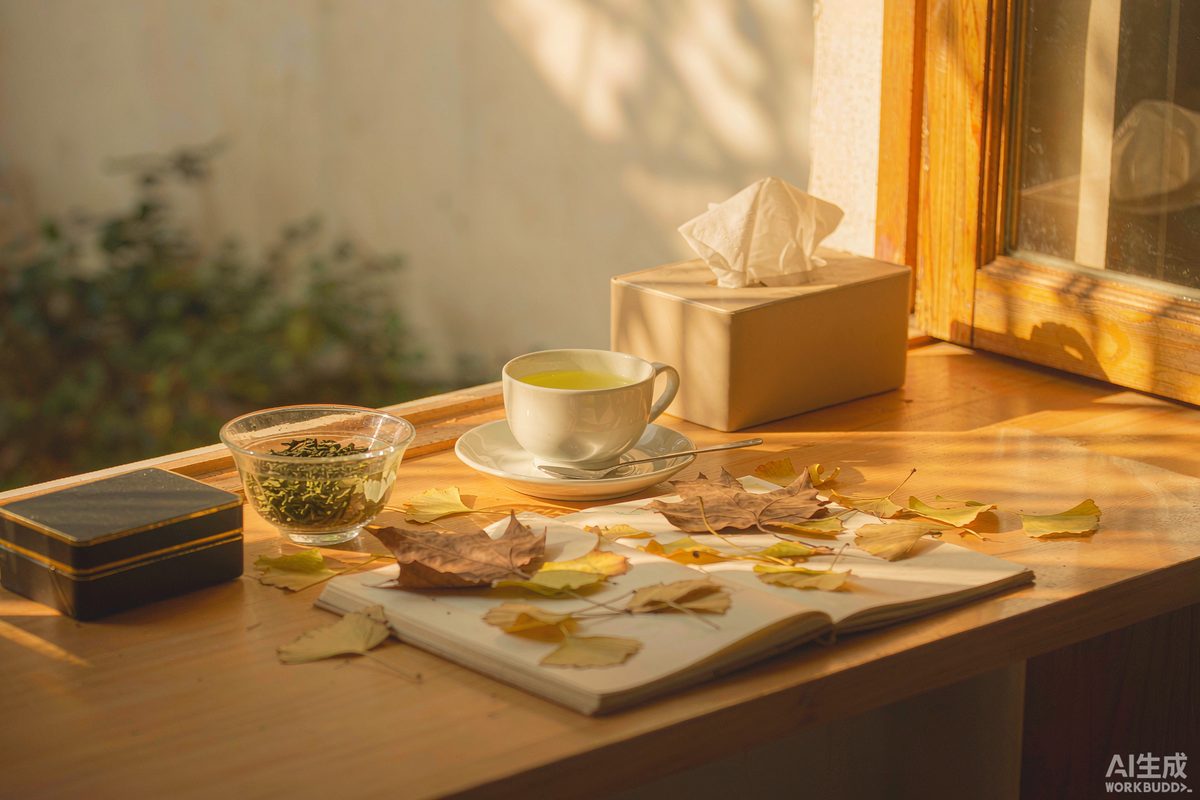
The calm tea: chamomile, passionflower, lemon balm. The evidence here is the softest of anything on this list — a gentle nudge, not an intervention. But the ritual is real: boiling water, steeping, sitting with a warm cup and no screen is its own wind-down, and the warm liquid supports the Spleen while the ritual pulls the day's Yang down for the night. Buy it for the ritual, not the pharmacology.
And now the graveyard, so you can keep your money. The $120 smart stress-tracker ring: it measured my sleep badly, my 'stress' vaguely, and taught me nothing a two-minute body scan didn't. The lavender pillow spray: it's a candle in a different jar — pleasant, useless for an actual racing mind. The 'brain-settling' tincture: chamomile at a premium.
The rule these all share is the rule I'd tattoo on the drawer if I could: if a product's entire mechanism is a vibe, it's a vibe, not a tool. Spend on the things that move something — pressure, sensation, aroma with a real pathway, an amino acid with real EEG data — and skip the rest.
- The graveyard rule: if a product's only mechanism is 'feels calming,' it's a scent, not a tool. Real calm tools move something physical — pressure, sensation, an aroma with a measured pathway, or a compound with data.
- Buy the calm tea for the ritual, not the ingredients — the warm, screen-free pause is doing the actual work, and that's fine as long as you know what you're paying for.
The Toolkit, Stacked in the Right Order
If I had to hand a single, coherent toolkit to someone whose mind won't stop, it would be this, in this order — because order is the thing everyone gets wrong. The temptation is to reach for the gentlest, calmest thing first, but a stuck loop doesn't need more gentleness. It needs a physical interrupt, then movement, then the cognitive tools once the heat has come down.
So: first, the acupressure ring — two minutes, roll the fingers, press the thumb web. Sharp, physical, immediate. It breaks the groove. Second, outward movement — the texts' 'anger overcomes pensiveness' is really about this, spending the loop's borrowed energy outward so the inward knot can release. A fast walk with arm swing, a few jumping jacks, anything that discharges rather than dwells.
Third, only now the cognitive layer: the worry journal to make the loop finite, L-theanine if the afternoon heat needs a nudge down, rosemary in the diffuser to clear the residual fog. And in the evening, the weighted blanket and the calm tea to carry the downshift into sleep.
That's the whole drawer, and it's honest about its own ceiling. None of it treats an anxiety disorder, and if the loop has been running for weeks or it's tangled up with real despair, the right move is a professional — and the tools run alongside that, not instead of it. What they do, reliably, is interrupt a stuck mind in the moment and give the body a chance to downshift.
For most of us, most days, that's the difference between another hour inside the loop and an actual evening. The drawer can't fix you. It can, sometimes, hand you back the hour.
- Order matters more than any single item: physical interrupt first (ring, movement), cognitive tools second (journal, L-theanine), wind-down last (blanket, tea). Reversing it — trying to journal a mid-spiral mind — just feeds the loop more material.
- Know the ceiling: this toolkit interrupts a stuck mind; it does not treat a disorder. Chronic rumination or real depression belongs with a clinician, and the tools run alongside professional care, never in place of it.